For those who’ve been sleeping under a cool, mossy rock for the last while, TSMC is the biggest semiconductor manufacturer in the world. You can imagine how well they’ve been doing as the AI industry races to build more and more data centres—but you also don’t need to imagine because the official numbers are in, revealing that TSMC’s revenue in August surged by a face-melting year-on-year increase of 53%.
TSMC’s revenue for August alone totalled NT$514.806 billion, which is roughly $16.35 billion USD. Though this is the first time monthly revenue has broken the NT$500 billion sound barrier, it also marks the fourth consecutive month of record-breaking gains for the company. Between January to August 2026, TSMC made NT$3,386.87 billion (roughly $117 billion USD). This in itself is a 39.3% year-on-year increase.
CEO C.C. Wei said during the company’s latest earnings call that “AI-related demand continues to be extremely robust. The AI megatrend continues to drive the need for more and more computation, which supports the robust demand for leading-edge silicon. […] our conviction in the multi-year AI megatrend remains very high.”
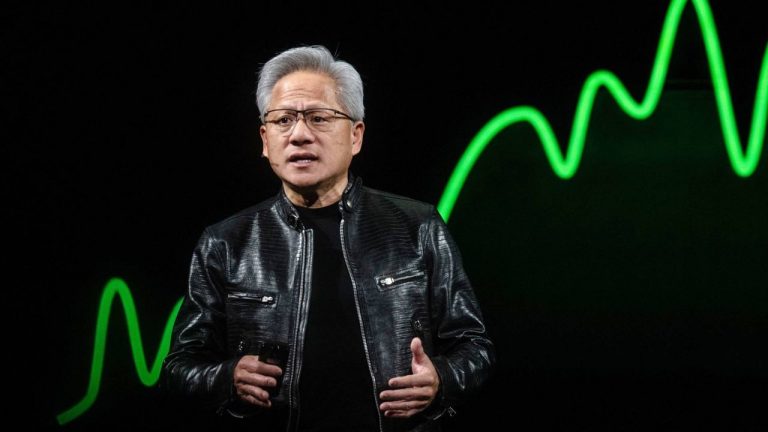
There’s no shortage of reasons to bolster the company’s confidence on this point. For one thing, Nvidia just announced it intends to buy AI development platform Hugging Face for $13 billion. CEO Jensen Huang also recently shared that 100,000 Nvidia GPUs were used to train OpenAI’s latest model, GPT-6 Astra, and there are apparently already plans to bring quadruple that amount of hardware online. The future of AI ain’t looking any less hardware-hungry, and the industry is going to continue to require a lot of semiconductors to satiate it.
In terms of foundries, TSMC had a market share of 72.5% in Q2 of 2026. According to TrendForce, demand for AI server GPUs kept 5nm, 4nm, and 3nm production lines fully booked (though apparently initial inventory buildup for new iPhones also helped). As for the near future, TSMC has already committed to using ASML’s next-generation production technology from 2030 (with other major players set to pick up the tech as soon as 2028).
So, yes, the chipmaker is doing very well. For comparison’s sake, Samsung has the next biggest slice of the semiconductor pie after TSMC, though its market share amounted to 5.9% during Q2—that’s a huge gap.
Now that you’re up to speed, may I ask if there is room for one more under your ever-so-nice rock? I’m just looking for somewhere to camp out until memory and GPU prices become a bit more sensible again.