Basketball was one sport I loved playing as a kid—not only to compete or spectate, but just for fun. I was not good at it. So I stopped playing, partially because I hated feeling like my teammates were stuck with me. When I got benched, that bummed me out. But when I got put in, the responsibility to not let my friends down made my heart race, even if it supposedly didn’t matter if we won. Now I realize I shouldn’t have been so hard on myself.
NBA The Run saddled me with the same existential questions I had back in those days. It’s a 3-on-3 throwback to arcadey classics like NBA Jam, Street, and my personal favorite, the one where you can play as a horse. These games trade the simmy mechanical depth of more buttoned-up ball ’em ups for easily executed moon jump dunks, gaudy tricks, turbo buttons, and commentary from guys yelling stuff like “Boom shaka-laka!” It’s basketball as only videogames could envision it.
In other words, if classic 2K was Ball Turismo, NBA Street was Midnight Dunk Club. Much chiller, just as killer. But just imagine if Midnight Club had no arcade modes, no offline play of note, and instead shot you right into competitive online races without so much as a tutorial. As much as I’m having fun with it, that’s the rough start you get with The Run, which released on Steam last week.
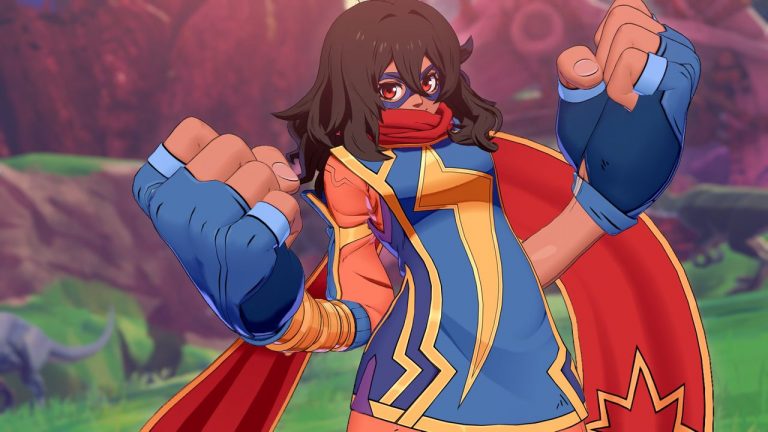
I soured on that setup while playing the default mode, squads. Instead of one player controlling an entire trio, six players each control a different character on the court. The playable cast includes a mix of real pro players, each of whom are outfitted with different stats and some personalized animations, as well as unlockable “street legends” with wackier playstyles, like the 7’7 El Gigante.
This format works great when you’re on the same couch as your teammates, or in a game like last year’s Rematch where clearly defined roles nudge each player toward what they should be doing. In 3-on-3 basketball though, it’s a mess of point-hungry buffoons rushing at the ball, shooting Hail Marys from half-court with every possession, and sprinting around aimlessly.
Squads might be great fun with a premade squad or in rare moments where you click with strangers, but an uncoordinated team is comically nonfunctional. I found myself longing for voice chat or a ping system, which just felt wrong. Shouldn’t digital street ball be an escape from the two-bit esports I endure in games like Overwatch?
That said, the core action still hooked me. It’s not as pure as Jam or as expressive as the trick-centric Street, opting for a nice balance between the two: dunks, blocks, and steals are simple button presses, but you can swerve around defenders with stamina-guzzling ankle breakers and shove other players as you please (street rules—it’s legal!). Go for a dunk without the ball to give your teammate an opportunity for an alley-oop, and you can even pass using the backboard or an opponent’s face with an off-the-heezay.
It’s all narrated by Bobbito Garcia (AKA DJ Cucumber Slice), who you might remember as the ultra-charismatic announcer from NBA Street Vol. 2. He furnishes the game with a fun-forward sensibility befitting its stylized look.
(Image credit: Play by Play Studios)
But because The Run gives you the tools to play stylishly without much fuss and celebrates you for doing it, the emphasis on matchmade online tournaments—the only way to play outside of private lobbies—feels at odds with everything on-screen.
The flair is there, but the competitive context emphasizes performance and mastery over expressive plays and all-in-good-fun antics. There’s nothing inherently wrong with that, but it made me wonder why it’s a street ball game and not a deeper simulation with a more involved metagame to explore. In real life, street ball is a rejection of stuffy structure, but The Run adds it right back. And taken as an esport, this will get old fast… there’s a reason goaltending and shoves are illegal in “real” basketball.
(Image credit: Play by Play Studios)
It does have one trick up its sleeve to keep things fresh, and it’s my favorite part of the game: the changing win conditions. Every match has different rules around points which cleverly upend go-to playstyles. In one game, every shot that wasn’t a three-pointer was only worth a single point. Funnily enough, this made dunks a lot easier to pull off, since defenders kept gravitating toward the 3-point line. In another match, dunks were worth three points, turning the game delightfully aggressive.
Still, I found myself wishing for even wackier gimmicks and tricks to toy with, but The Run’s team format emphasizes playing to win. Sure, I can pass to a teammate in hopes they’ll see my alley-oop and send it back to me in time, but nothing feels as reliable as rushing in for a dunk or pump faking to bait out a block and secure a 3-pointer. The game’s “in the zone” meter tries to reward you for flashy maneuvers, but games are often over before it can make a real impact, and at least one of the random rulesets removes it from play entirely.
At that point, why risk losing the ball just to do something cool? A question like that feels counter to the spirit of The Run’s predecessors, but in a game that’s throwing rank points at you after every match and tracking your win rate percentage, it feels unavoidable.
(Image credit: Play by Play Studios)
This is less of a problem in the game’s solos mode, which I’m liking a lot more than squads. It’s a 1v1 where both players control their entire team, swapping between them with passes. Not only does this mean you don’t have to rely on silent randos, but you can also choose a spread of pros that cover each other’s weaknesses. I can keep a tall center like Victor Wembanyama in the paint, confidently block an opponent’s shot, and dish the ball to Jaylen Brown for a reliable swish. All of a sudden, I’m actually playing basketball! And if I want to go for off-the-heezays and alley-oops, my successes and failures are mine alone.
Once you focus on the fundamental balling (which may take some losing at first as, again, the game has no tutorial at all), The Run reveals itself to be a revival worthy of its inspirations, for the most part. That said, I still wish it had a singleplayer campaign like NBA Street Vol. 2’s Be a Legend mode, or at least something along the lines of NBA Hangtime’s create-a-player, which let you create custom ballers and boost their stats with each win in offline matches. Instead, there’s nothing meaty for a solo player, and the online modes don’t lend themselves to casual enjoyment.
The unfortunate result is that there’s not really a way to unwind while playing The Run, which feels absurd to say about a game which strips away basketball’s depth so it can focus on the cool, flashy stuff. It’s a bit of frantic fun, but the games it’s taking after and the riffs that arose in their absence, like the Jam-inspired fantasy Supergiant RPG Pyre, have proven that arcade basketball can be bigger and better.
2026 games: All the upcoming games
Best PC games: Our all-time favorites
Free PC games: Freebie fest
Best FPS games: Finest gunplay
Best RPGs: Grand adventures
Best co-op games: Better together