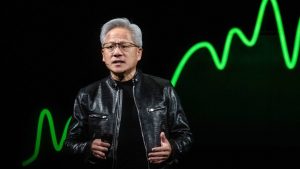
If you are aware of AI, you are likely also aware of the word ‘agentic’. Effectively, as AI gets more powerful, it is supposed to run your tasks autonomously with less oversight, and Nvidia CEO Jensen Huang thinks that is the future of personal computing.
In a Q&A at Computex 2026 attended by PC Gamer, Huang was asked why Nvidia decided to get involved in the laptop market now. With the official unveiling of its SoC chip, RTX Spark, Nvidia is ready to enter the gaming laptop space, but with the memory crisis ongoing (and Nvidia already doing phenomenally well with AI), one would assume the profit margins aren’t as high in this area.
He said, “The real question is, can we make a contribution? If we can’t make a contribution, and it’s a marginal contribution, we won’t do it. Can we help reinvent the PC?”
He continued, “If you get a chance to reinvent the single most important instrument, the single most important tool of humanity, what you and I grew up with [that] defined just about everything about our lives, and we have an opportunity after 40 years to go reinvent it for the age of AI.”
Yeah, it’s probably no big shock that the company that owes its sudden explosion into being the most valuable company in the world to AI also thinks that AI is the future. Huang told us that Nvidia still builds graphics cards, “and we do it insanely well, and we still do it insanely well today.”
(Image credit: Future)
He mentioned Nvidia’s history in the personal computing market and noted the RTX Spark took three years and collaboration with Microsoft and MediaTek, plus hundreds of people, to get where it is today.
Huang said that personal computers in the future will not be ones that only react when you actually use them. He said, “In the future, when we leave it, you know what, we’re talking with it all the time. I’ll be chatting, you know, in WhatsApp with my agent, and it’s doing stuff. And my agents are going to have names, and they’re on my WhatsApp, and we’re just chatting all the time. I’ll be talking to it, and it’s going to be talking back; it’ll call me.”
Huang excitedly told the press, “That is the personal computer future. Tell me that’s not R2D2. Tell me that’s not robotics. Tell me that’s not cool.”
Eh, I think that’s not cool, and I certainly don’t want my PC running autonomously. Ignoring the environmental costs of AI, the effect on the personal PC market, and even the Microsoft co-authored paper that suggested regular generative AI use leaves users with a “diminished skill for independent problem-solving“, I simply don’t like the privacy implications of leaving all your data in the hands of the black box that is generative AI.
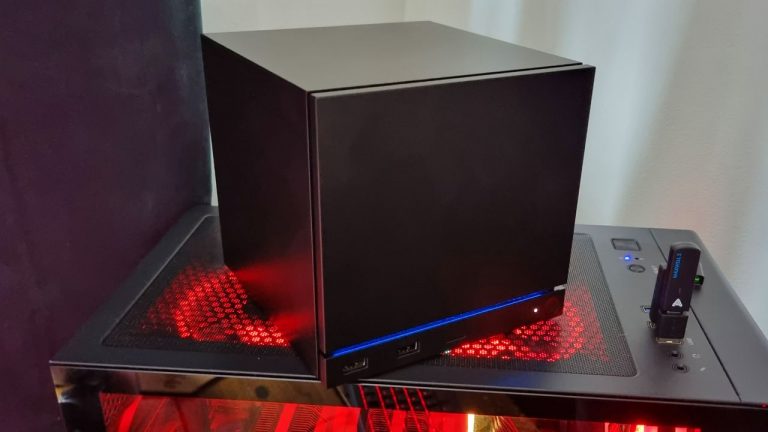
Huang does think that it will be widely adopted, anyway. “We’re going to redefine how people think about computers.” He continued, “I believe that people, many, many people, will have this at home, just like they have a car at home. Soon, the agent is going to be so valuable to you, you want it to be sitting in a nice box, sitting in a nice computer, secure, performant, something you could carry with you, something you would use for a long period of time.”