A new report claims that Intel is pushing its client PC customers to buy its latest CPUs built on 18A silicon. It’s said the older Intel 7 node is increasingly being reserved for more profitable server chips and even Intel CPUs made in TSMC’s fabs will be in short supply.
Nikkei Asia says Intel’s move is in response to “surging” demand for server CPUs thanks to good old AI. Consequently, “Intel is asking its leading PC partners, including those in the US, China and Taiwan, to increase their use of central processing units built with the company’s 18A production process,” the report says.
As Nikkei Asia notes, the older Intel 7 process node is still used in a wide range of CPUs for PCs and servers. On the desktop, that includes 13th Gen Alder Lake and 14th Gen Raptor Lake CPUs, like, say, the Core i7-14700K.
But the report claims Intel has told PC builders that such chips are “unlikely to see additional supply allocations or accelerated shipment schedules.” What’s more, that constraint also applies to CPUs which are largely manufactured by TSMC rather than on Intel 7, such as the latest Arrow Lake desktop chips.
All are apparently being deprioritised in favour of either using Intel 7 to knock out more profitable server CPUs, or otherwise upselling PC builders to CPUs based on its latest 18A node.
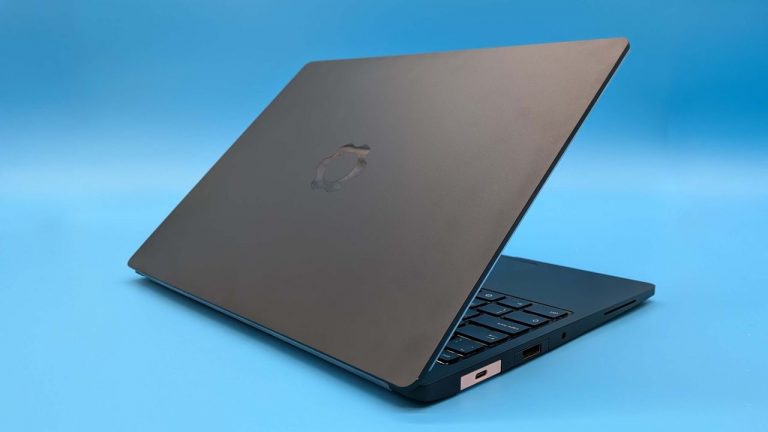
For now, Intel’s 18A silicon is only available with mobile CPUs… (Image credit: Intel)
One executive at a PC maker told Nikkei Asia, “We recently placed an additional order for 100 Intel 7 CPUs. We only got 30, and 10 of them were built with 18A technology. We were told if we don’t take the 18A CPUs, they would be given to other PC makers.” Yikes.
There are a few interesting implications in all of this. First, in the immediate term, it doesn’t imply anything great for desktop CPUs. That’s because all of Intel’s current desktop chips are either Intel 7 or TSMC silicon. There are no 18A desktop CPUs, not until Nova Lake arrives. That won’t be until later this year at the earliest, and 2027 is more likely in terms of wide retail availability.
Frankly, if this report is accurate, it makes Intel’s recent launch of Arrow Lake Plus chips pretty odd. The whole point of Arrow Lake Plus, which includes the Intel Core Ultra 7 270K Plus and Core Ultra 5 520K Plus desktop CPU models, is to reposition Intel’s desktop CPUs with a better value proposition. But what’s the point if you can barely buy them?
Then there’s the question of what this might do to laptop pricing. It might not be all bad news given that Intel has recently announced its new budget-specced Wildcat Lake chips. They’re essentially cut-down versions of Intel’s 18A-based Panther Lake CPUs, with up to two Performance and four Efficient cores. Panther Lake offers double those core counts.
Problem is, you wouldn’t want just two Performance cores in a gaming laptop. So, that means high-performance portables will be forced to use more expensive Panther Lake CPUs given Arrow Lake H and HX mobile and older Raptor Lake mobile chips are presumably now hard to source.
The report also has positive implications, if true, for Intel’s 18A technology. After all, if yields on 18A were terrible, Intel wouldn’t be able to push PC builders to buy 18A CPUs over Intel 7 CPUs.
Anywho, it will be interesting to see how this all plays out. The whole thing with the implications of this report being that Intel’s recently launched Arrow Lake Plus CPUs are being heavily de-prioritised is pretty odd, that’s for sure. As I write these words, it’s no problem buying an Intel Core Ultra 7 270K Plus on Newegg. So, is that going to change? Watch this space.