In a conversation at this year’s rich person convention—aka the World Economic Forum—Microsoft CEO Satya Nadella warned that AI will lose public support unless it’s used to “do something useful that changes the outcomes of people and communities and countries and industries.”
“We will quickly lose even the social permission to take something like energy, which is a scarce resource, and use it to generate these tokens, if these tokens are not improving health outcomes, education outcomes, public sector efficiency, private sector competitiveness, across all sectors, small and large, right?” said Nadella. “And that, to me, is ultimately the goal.”
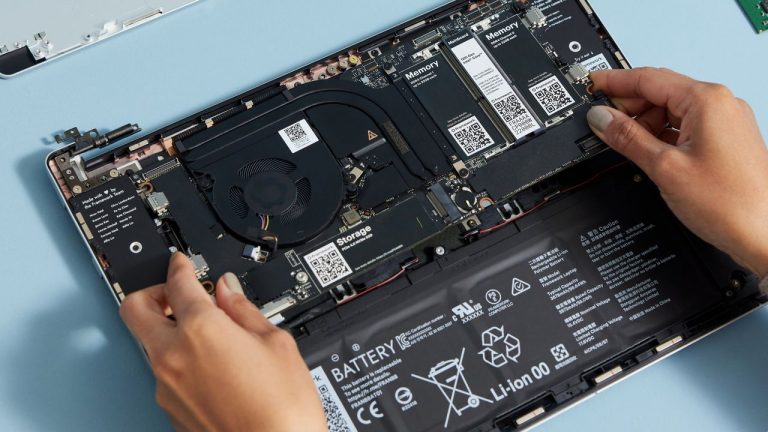
On the supply side, Nadella says that AI companies and policy makers must build out “a ubiquitous grid of energy and tokens,” which is the task currently making it impossible to buy a stick of RAM at a reasonable price. But after that, he says it’s on employers and job seekers to, more or less, just start using AI.
“The demand side of this is a little bit like, every firm has to start by using it,” said Nadella, throwing in some industry-standard hyperbole by calling AI a “cognitive amplifier” that gives you “access to infinite minds.” The CEO added that job seekers should pick up AI skills (undefined), in the same way people master Excel to make themselves more employable.
“People need to say, ‘Oh, I pick up this AI skill, and now I’m a better provider of some product or service in the real economy,” said Nadella.
He did at least provide one real example of what he means by all this: “When a doctor can … spend more time with the patient, because the AI is doing the transcription and entering the records in the EMR system, entering the right billing code so that the healthcare industry is better served across the payer, the provider, and the patient, ultimately—that’s an outcome that I think all of us can benefit from.”
I wonder if I’ll really want to spend more time talking to my doctor with an AI eavesdropper listening intently for reasons to reclassify my preventative care visit as a more expensive diagnostic visit (could we just redesign the US healthcare system instead?), but at least for some doctors, AI recording and note-taking tools have already been helpful. One study said that medical professionals reported “tremendous benefits” from using AI scribes, while calling for more research.
I also find automatic transcription tools useful, because correcting their mistakes is faster than transcribing long audio passages from scratch. If I were banking on general purpose LLMs being as revolutionary as personal computers and the internet, though, I’d find it worrying how many applications boil down to transcribing audio, summarizing text, and fetching code snippets.
Are those functions really something we’re going to reorganize society around? There are reasons to be skeptical. They’re error-prone—a UK police chief just resigned over a Microsoft Copilot error—and a recent report by researchers associated with the MIT Media Lab suggests that despite billions in investment, “95% of organizations are getting zero return” from adopting AI.
Addressing the notion that AI is a bubble waiting to burst, Nadella said that it’s only a bubble if tech company partnerships and infrastructure spending are all there is to it. He’s confident, however, that AI will “bend the productivity curve” and bring “economic growth all around the world, not just economic growth driven by capital expense.”
Catch up with CES 2026: We’re on the ground in sunny Las Vegas covering all the latest announcements from some of the biggest names in tech, including Nvidia, AMD, Intel, Asus, Razer, MSI and more.