(Image credit: Future)
1. Best gaming laptop: Razer Blade 16
2. Best gaming monitor: KTC H27T22C-3
3. Best gaming handheld: Lenovo Legion Go S SteamOS
4. Best SSD: WD Black SN8100 2 TB NVMe SSD
5. Best CPU: AMD Ryzen 9 9950X3D
6. Best motherboard: Gigabyte X870 Aorus Elite Ice
7. Best gaming keyboard: Be Quiet! Light Mount
8. Best gaming mouse: Corsair Sabre V2 Pro Ultralight
9. Best gaming headset: Razer BlackShark V3
10. Best gaming mic: Amazon Basics USB condenser
11. Best graphics card: AMD Radeon RX 9070 XT
12. The wildcard: Razer Wolverine V3 Pro 8K PC
This past year has been a fascinating one for PC gaming hardware. I don’t think 2025 is going to go down as a vintage year for the tech of our favourite hobby, but that doesn’t mean we’ve been without either fantastic new toys to play with or new spins on gaming technology to throw at our games.
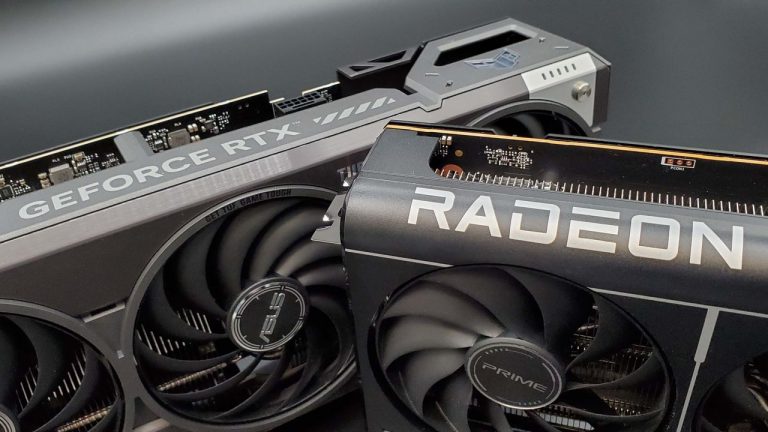
Inevitably the biggest thing to happen to PCs in 2025 was two whole new generations of graphics cards launching from AMD and Nvidia respectively. Both had a lot to offer and both had a heap of problems—though interestingly they were largely more to do with marketing and product positioning than actual hardware issues.
Well, I say that, but the RTX Blackwell launch was the first time in a good few GPU generations I’ve seen Nvidia really drop the ball on its driver support. We saw black screens and flaky cards far more often than in previous launches. On the AMD side it should have been an easy victory, but ultra-limited stock and frankly offensive price gouges really soured the RDNA 4 launch for a lot of PC gamers.
Still, here we are ready to hit 2025 and the GPUs are bountiful and largely available around their original MSRP… but maybe not for long. The spectre of the RAMpocalypse looms large over PC gaming, though thankfully not yet for the brilliant gaming laptops of this year, and the outstanding peripherals we’ve tested in 2025 aren’t going to be hit in the same way as the doubling, tripling, quadrupling RAM prices.
Throughout the holidays we’ve been nominating our very favourite bits of gaming hardware that we’ve tested over the past year, but today I get the great pleasure of announcing which of these peak PC bits get the coveted PC Gamer Hardware Awards for 2025.
Best gaming laptop of 2025
(Image credit: Future)
“This is the first gaming laptop that has been able to deliver the sort of all-round PC experience that would have me consider ditching both my work laptop and my desktop gaming PC. And that is saying something. The Blade 16 is a genuinely lovely device, that can deliver whether plugged into a wall socket or running on its battery.” -Dave James
Read our full Razer Blade 16 review.
WINNER: Razer Blade 16 (2025)
I was not a big fan of the previous version of the Blade 16. In order to cope with the demands of the RTX 40-series and a desire on Razer’s behalf to have them running at top speeds, the company expanded its laptop chassis to accommodate more cooling potential. And with that went the classic sleek Razer design ethos.
But it’s back in force with the new Blade 16, however, as Razer was determined to hit back against Asus’ impressively slim Zephyrus G16 machines. The updated design is wonderfully slim, but keeps a wee bulge under the CPU/GPU area to aid with cooling. It still cannot run an RTX 5090 at full chat inside such a slender chassis, but that’s not what this do-everything machine is about.
This is a gaming laptop that can be your work partner through the day and your gaming buddy into the evenings. But it’s also capable of delivering outstanding on-battery gaming performance, too. A great little device.
Lenovo Legion Pro 7i Gen10
While I love the Razer Blade 16 for its new svelte aesthetic, I can still appreciate a proper big gaming laptop designed purely for speed. That’s what the Legion Pro 7i is, and it absolutely delivers, offering the fastest system you can jam an RTX 5080 into, which will, in some instances, beat out more expensive RTX 5090 systems in terms of gaming frame rates.
But though it is a chonker, it’s still a rather stylish system, especially with those LEDs on the rear as though ringing street racer twin exhausts.
Obviously, as a Lenovo, it has an excellent keyboard, and the OLED panel is glorious, but honestly, it’s the software that really separates it from the pack for me. The LegionSpace app is certainly no bloatware as it’s entirely responsible for getting the most out of your laptop, but it also trusts the user more than any gaming notebook on the market.
The custom settings in the app allow you to dial back the regular fan roar you get from all gaming laptops at full speed by restricting the CPU, but still giving the GPU the full beans. This means you get great performance without the accompanying headache of excessive fan noise. It’s seriously impressive stuff.
Read our full Lenovo Legion Pro 7i review.
Best gaming monitor of 2025
(Image credit: Future)
“A lesser known gaming monitor brand feels like a step into the unknown. But the KTC H27T22C-3 proves that you can get a great 1440p gaming experience for barely over $150 if you’re willing to be a bit adventurous.” -Jeremy Laird
Read our full KTC H27T22C-3 review.
WINNER: KTC H27T22C-3
Not only are OLED and 4K monitors getting cheaper, but so too are 1440p picks. KTC’s H27T22C-3 is pretty much down to the price of a 1080p panel, and it comes with a super quick 210 Hz refresh rate, paired with an about average 1 ms response time. As is the case with pretty much all monitors, the name of this one is a bit funky, and you have to make sure you pick the model with 3 at the end, as missing that will cost you brightness and refresh rate.
However, with this one in your basket, it does pretty much everything you might want from a value-oriented 1440p monitor, apart from its just okay DisplayHDR 400. Our Jeremy said, right out of the box, the IPS panel is “immediately impressive”. It has solid brightness, strong viewing angles and colours look great. You aren’t getting any USB ports (a common compromise for value-based monitors), and the stand is tilt-only. This means adjustments can be hard to make.
Still, what makes this KTC monitor stand out is that it manages to avoid the pitfalls of budget monitors, not needing any calibration and not losing out on any of the basics. If you’re in need of a screen on a budget, this 1440p wonder is beating out similarly priced 1080p choices easily, and I suspect it will be the best budget 1440p gaming monitor for some time.
Philips Evnia 27M2N3800A
This reasonably priced beauty can swap between 4K (at 160 Hz) and 1080p (at 320 Hz) quickly, which makes it a dynamic choice for almost any rig. At just 27 inches, this monitor is a bit on the small side, but it’s hard to argue that it doesn’t fight for every single penny it costs. At MSRP, it’s already beating out tonnes of other 4K choices, and it tops this off with an IPS panel with a 0.5 ms response time. Impressive.
That price has to come with some compromises, and those come in the form of limited HDR capability, a cheap-feeling chassis, and the lack of USB Type-C. This means you can’t use your monitor as a hub, but it’s a worthwhile tradeoff for such a lovely screen.
Perhaps the biggest downside to this Philips panel is that it signifies the pricing mismatch between 4K monitors and the rigs needed to run them. Something tells me this gulf will only widen over the coming years. Still, it’s remarkable to think of how little a great panel costs you nowadays.
Read our full Philips Evnia 27M2N3800A review.
Best handheld gaming PC of 2025
(Image credit: Future)
“This is the first device to bring serious performance to a handheld gaming PC without the drawbacks of a bloated operating system. With SteamOS running, While it’s not a perfect device, it trades blows with the best handhelds out there, and is stylish and incredibly comfy to use.” -Jacob Fox
Read our full Lenovo Legion Go S SteamOS review.
WINNER: Lenovo Legion Go S SteamOS
Our Jacob said this Legion Go S was “almost exactly” what he was looking for in a handheld gaming PC. We still know that the Z1 Extreme is a bit of a banging chip, even if it’s getting on in age, and native SteamOS support means you can get even better performance out of it when compared to Windows. The one downside of SteamOS is not getting built-in support for some multiplayer titles, as Linux doesn’t play too friendly with many bits of anti-cheat software.
As well as this, over half a year later, the trackpad is still a bit disappointing. It lacks native support across the board, only working in a few games now, and it doesn’t stay on when not actively using it, so it all feels a tad messy. However, for its price, you are getting a comfortable and intuitive handheld that also just so happens to look gorgeous and runs very well.
Generally speaking, you can expect a few hours of play out of the device, often reaching between 30 to 60 fps in most games. It may not play absolutely everything (thanks, Linux), but what it can play, it plays well, with near top-tier performance under $1,000. SteamOS makes for a somewhat more console-like experience, but as we’ll see from our next pick, that’s not always a bad thing.
Asus ROG Xbox Ally X
The Asus/Xbox collaboration needed to pack a real punch to justify that very high price tag, and our testing shows it has done just that. It is the best handheld to date, in pure stats, managing to place above pretty much everything else we’ve tried in gaming tests. Turns out the Z2 Extreme chip, with its upgraded RDNA 3.5 architecture and higher GPU boost clock, is no joke when it comes to games.
The ROG Xbox Ally X isn’t just a powerhouse, though. The Xbox Full Screen Experience (FSE) feature is a genuinely good bit of software, and the device itself is very comfortable in the hand. To top this all off, it’s also a really quiet device, even at turbo settings. The battery life is also solid, giving two hours in our gaming tests.
In fact, this handheld would likely be a winner without the need to compare it to two other devices if it weren’t just so expensive, and if it had a nicer screen. With the Xbox Ally X, we’re adding hundreds of dollars onto the price of competitors, and getting 5-10 average fps more. Of course, if you want the best of the best, the Xbox Ally X is a winner in other ways too, but that’s a lot of money to spend when you can get a marginally inferior device for a good bit less.
Still, Asus and Xbox have knocked their first gaming handheld collaboration out of the park, even if we mere mortals may not get our hands on it.
Read our full Asus ROG Xbox Ally X review.
Best SSD of 2025
(Image credit: Future)
“This is the fastest PCIe 5.0 SSD on the market to date. It doesn’t matter if you’re a pro gamer or a working professional; the SN8100 delivers in every arena and then some. For its first PCIe 5.0 SSD WD has set the bar incredibly high. Now everyone else has to catch up.” -Zak Storey
Read our full WD Black SN8100 2 TB NVMe SSD review.
WINNER: WD Black SN8100
Another PCIe 5.0 drive that doesn’t cost at least two of my limbs? Is it my birthday? No, that’s just how far Gen 5 drives have come. Granted, $250 is still a bit much for a lot of folk, but with performance like this, those with deeper pockets may well find it easy to justify the upgrade.
Why? Because, with a sustained read speed of 14,900 MB/s, and a sustained write speed of 14,000 MB/s, the WD Black SN8100 is eye-watering-ly quick. Not only that, but random 4K performance is far from a let-down either, turning in a 119 MB/s read speed, and a 349 MB/s write speed during Zak’s testing.
The fact this thing only briefly brushed up against 74 °C during all of his benchmarking really makes this SSD the complete package. But is it enough to win the prize overall? You won’t have to wait long to find out.
Crucial P510 NVMe SSD
Even amid the memory apocalypse, you can still find affordable PCIe 5.0 SSDs—and here we have the stand out case in point. Rather than paying the price for a middleman manufacturer, Crucial has instead opted for its own in-house Micron 276-layer TLC NAND.
The result is a speedy Gen 5 drive at a much less steep cost. This particular choice of flash memory is denser and, at least on paper, technically faster than some of the competition too. To get to the point, you’re getting a read speed of up to 11,000 MB/s, and a write speed of up to 9,000 MB/s. I’d say that means this budget SSD more than deserves the nomination.
Though not for much longer, as Micron is killing the Crucial brand entirely. Boo.
Read our full Crucial P510 NVMe SSD review.
Best gaming CPU of 2025
(Image credit: Future)
“The Ryzen 9 9950X3D is the jack-of-all-trades CPU. As good as the Ryzen 7 9800X3D in games and roughly the same as the 9950X in content creation. It’s a processing powerhouse with few peers, but it’s not without niggles. And that price tag puts it well into the niche enthusiast territory.” -Nick Evanson
Read our full AMD Ryzen 9 9950X3D review.
WINNER: AMD Ryzen 9 9950X3D
We had to wait a while for this monster of a processor, but it was worth the long, drawn-out months. The Ryzen 9 9950X3D arrived in March and immediately topped the charts for the fastest gaming CPU in 2025, even beating the 9800X3D.
AMD’s dual-CCD processors used to be quite picky about working properly with games, but that was (mostly) resolved with the 9950X3D. The latest generation of 3D V-cache, bonded to the bottom of the first CCD, meant that AMD could push the clocks right up.
Where the 9800X3D enjoys a boost clock of 5.2 GHz, the 9950X3D can reach 5.5 GHz on the L3 cache-heavy CCD and 5.7 GHz on the normal CCD. For a jack-of-all-trades processor, it pretty much masters everything.
With nothing to touch it from Intel, though, AMD was free to set the price tag accordingly. Weighing in at $699 at launch, it’s barely dropped in price since then. My ‘AI summary’? Horribly expensive, outrageously capable.
AMD Ryzen AI Max/Max+ (Strix Halo)
This might seem like a bit of an odd nomination, given that we’re looking at a range of processors, rather than just an individual one. However, all of AMD’s Ryzen AI Max/Max+ have given us warm and fuzzy feelings this year.
Whether it was the range-topping Ryzen AI Max+ 395 in the Framework Desktop or handheld gaming PCs teased by Ayaneo and GPD that sport Strix Halo CPUs, it’s a processor that has rekindled our excitement for such pieces of hardware.
That’s because, by all rights, it has no business existing. AMD’s Strix Halo design takes the two CCDs from a Ryzen 9 9950X and pairs them with an IO die that houses a huge 40 compute unit RDNA 3.5 GPU.
Oh, and a 256-bit memory bus, with up to 128 MB of LPDDR5x-8000 RAM. We all hoped it would be a monster at gaming, but it’s barely on par with an RTX 4060. So why does it exist?
AI, of course. That amount of RAM and compute units makes it perfect for home-brewed machine learning shenanigans. Even so, we can’t wait to get our hands on a Strix Halo handheld.
Read our full AMD Ryzen AI Max+ 395 (Framework Desktop) review.
Best motherboard of 2025
(Image credit: Future)
“The Gigabyte X870 Aorus Elite Wi-Fi Ice looks great, offers a fine selection of ports, and will be happy company for any AM5 chip for years to come.” -Anthony Leather
Read our full Gigabyte X870 Aorus Elite WiFi7 Ice review.
WINNER: Gigabyte X870 Aorus Elite Ice
Another white motherboard? Pure coincidence, honest! But just like ASRock’s B860 Steel Legend, this motherboard from Gigabyte looks fantastic and has the feature set to back up its aesthetics. Oh, and a very reasonable price tag, too.
The AM5-socket X870 Aorus Elite WiFi7 Ice launched at $290, but it rapidly shed a respectable $30, and it’s still like that now, making it one of the best value X870 boards around.
And oh boy, do you get a lot of motherboard for your money. Three PCIe slots, four M.2 sockets for SSDs, and ten USB ports on the rear IO panel. Gigabyte favoured the storage aspects when it came to distributing the limited number of chipset PCIe lanes, as three of the M.2 slots are Gen 5, whereas only one of the PCIe slots is rated to that speed.
You can get motherboards where it’s all faster stuff or have more USB ports, but then you have to pay a lot more money for it. To our eyes, the Aorus Elite WiFi7 Ice offers the best balance of price tag, features, and performance of all the AMD AM5 motherboards we’ve tested this year.
MSI MAG Z890 Tomahawk WiFi
You’ve possibly picked up by now that there’s a bit of a theme going on with our nominations for best motherboard of 2025, and that it’s all about value for money. You can always pay more or less for a mobo, but you’ll either miss out on really useful features or shell out for something that you’ll never use.
That’s not the case with MSI’s MAG Z890 Tomahawk WiFi for Intel Core Ultra 200S processors. Like the X870 Aorus Elite Ice, it launched with a higher price tag than what it currently sports, and although it’s still around $40 more expensive than the B860 Steel Legend, you’re getting some really nice extras.
To begin with, Wi-Fi 7. Admittedly, unless you have a Wi-Fi 7 router to go with it, you won’t see the full benefit, but if you do, then say hello to super-fast, low-latency wireless networking. As someone who converted wholesale to Wi-Fi 7 this year, I can assure you that it’s worthy of the hype.
Intel Z890 chipset is stellar, too, and it’s why MSI’s board has three PCIe slots (one Gen 5, two Gen 4) and four M.2 sockets (one Gen 5, three Gen 4). The rear IO panel boasts two 40 Gbps Thunderbolt 4 ports, plus four 10 Gbps USB (one Type-C, three Type-A) and four 5 Gbps USB ports.
The MAG Z890 Tomahawk is also very easy to live with, thanks to a clear and user-friendly BIOS/UEFI interface, quick release mechanism on the GPU PCIe slot, and the top and bottom M.2 slots, plus a wealth of sensibly positioned power sockets and headers.
Read our full MSI MAG Z890 Tomahawk WiFi review.
Best gaming keyboard of 2025
(Image credit: Future)
“It’s finally time to haul my verdict out of the shadows: though by no means silent, I’m definitely a fan of the sound-dampened clacks on Be Quiet’s Light Mount. It lives up to its name in more ways than one, too, boasting vibrant, head-turning per-key RGB lighting—even the software offers few reasons to complain!” -Jess Kinghorn
Read our full Be Quiet! Light Mount review.
WINNER: Be Quiet! Light Mount
Be Quiet! really did its name justice this year with the Light Mount, because it’s seriously the quietest keyboard we’ve ever heard here in the PC Gamer hardware den. Our Jess still stands by it and uses it daily.
That’s thanks to its own silent tactile switches and a ton of dampening, which somehow doesn’t feel too mushy, unlike some silent keyboards. The Light Mount is also just a very solid keyboard, with PBT keycaps, 1K polling, vibrant RGB, and even a knob and left-side macro keys.
The real draw is its quietness, though: it’s a genuine first that we’ve seen this year, a clacker keeping so quiet.
Gamakay x NaughShark NS68
This bad boy has slid right in to take the place of the Mountain Everest 60, which we used to frequently recommend as a lovely cheap keyboard, but which seems to have completely disappeared from retailers. The Gamakay is also a lovely keyboard for the price, and is actually available.
Part of what makes this diminutively priced clacker so compelling is that we’ve seen it maintain a low price—even dropping to less than $40 during sales events—while packing in a bunch of very modern gaming features. We’re talking Hall effect switches for rapid trigger, 8K polling, and even a carry strap. Its 68% size is also a nice sweet spot, as you still get those arrow keys and some nav keys.
The simple fact is, it offers pretty much all the features you might want out of a gaming keyboard, and has somehow remained consistently cheap throughout 2025 since its launch.
Read our full Gamakay x NaughShark NS68 review.
Best gaming mouse of 2025
(Image credit: Future)
“This mouse has taken lightweight to a new level, weighing just 36 g. This, plus its great sensor and sturdy build, makes for a fantastic wireless mouse for competitive FPS gaming. It has zero extra bells and whistles, though, so it’s purely for that market.” -Jacob Fox
Read our full Corsair Sabre V2 Pro review.
WINNER: Corsair Sabre V2 Pro
The Corsair Sabre V2 Pro genuinely shocked me this year. I got my mitts on it at Gamescom and could not believe how light it was. I kind of still can’t.
At just 36 g, it’s a genuine step forward in the ultralight market, especially considering others that get close (say, 39 g) tend to have giant holes in the underside. Not this one, it’s as solid as they come, and doesn’t feel flimsy in the slightest.
It cuts back on pretty much everything else—RGB, buttons, battery life—but it’s worth it for competitive FPS gaming. I feel about this mouse the same way I did about the original Logitech G Pro X Superlight when it launched a few years ago: It’s a genuine jump forwards in the ultralight mouse market.
Orbital Pathfinder
This is a first, I think, not just for this year but in general. This is a gaming mouse that lets you adjust things to a ridiculous degree, to get it just right for your hand and your grip style. We’ve seen similar from DIY-ers, but none that come as a whole, easy-to-set-up package like this.
To boil it all down, it comes with a ton of different panels that can fit on the sides and on the rear of the mouse. These are all different shapes and sizes, which means you can mix and match them to get the perfect height and width of your mouse. Though, as our Zak notes in his review, once you’ve picked the right ones for you, you probably won’t touch the rest again.
It’s definitely a gaming mouse, too, given its 30K DPI, up to 8K polling, and light 52–55 g weight. So, if you’ve ever looked at all the gaming mice on the market and thought ‘how do I know which one will suit my hand?’, Orbital has given you a solution this year.
Read our full Orbital Pathfinder review.
Best gaming headset of 2025
(Image credit: Future)
“The BlackShark V3 is the wireless headset to finally knock the HyperX Cloud Alpha Wireless off its perch, and does so with a combo of simply outstanding audio quality, unbeatable wireless connection, and a super lightweight, comfortable design.” -Dave James
Read our full Razer BlackShark V3 review.
WINNER: Razer BlackShark V3
The BlackShark has been around in various iterations for a while, but with the V3 version, Razer has finally nailed the formula. Its titanium drivers now have the addition of a “driver plug” to reduce harmonic distortion, and the 75% larger magnet makes for a seriously detailed, tight-and-punchy audio experience.
There’s no noise cancelling, unlike the BlackShark V3 Pro, but we weren’t particularly impressed with it on the more expensive model anyway. It’s also 100 g lighter than the top-spec model, which means it’s very comfortable to use over a full day’s gaming, or in the office, should you so require.
And if you’re really serious about your competitive gaming, the HyperSpeed Wireless interface has a low-latency mode, dropping the connection speed to just 10 ms. You’d likely need to be an esports gamer to really tell the difference, but if you want the fastest-responding wireless set on the market, this is it. I’m singing the Jaws theme in my head right now, how about you?
Fractal Design Scape
Ah, my pretty. There’s something wonderfully Nordic about the Scape’s design, being a handsome wireless set with plush, fabric earcups and a matching headband. It’s full of clever design touches, complete with some subtle RGB lighting and a fully-detachable, yet also flip-to-mute, microphone.
The real game changer, though, is the wireless charging dock. Two fabric ovals magnetically pull the headset into position, with no cables or clunky sockets required (other than the one connecting the base to your PC, obviously).
It sounds great, too, with some warm-yet-accurate drivers. It’s tuned pretty neutrally out of the box, but Fractal Design’s software allows you to easily set your own EQ, which really helps the Scape to come alive. It’s capable of a serious punch of bass with some tweaking, without losing its shiny treble at the top end of the spectrum. What a nice thing, ey?
Read our full Fractal Design Scape review.
Best gaming microphone of 2025
(Image credit: Future)
“I wasn’t expecting a whole lot from the Amazon Basics mic, but I’m pleased to report it’s been nothing but a pleasure to test. While you only get the bare minimum of features, it’s brilliant at its one goal in life—capturing great audio for a very, very reasonable price.” -Andy Edser
Read our full Amazon Basics USB Condenser microphone review.
WINNER: Amazon Basics Microphone
The first thing you need to know about this Amazon Basics mic is that it’s cheap. I mean, really cheap. For less than $30, I wasn’t expecting a huge amount from this little microphone—but wouldn’t you know it, it really delivers the goods.
The sound quality it’s capable of capturing, both close up and at a distance, sounds far, far better than you’d expect given the minimal expense. It’s not going to blow anyone’s socks off, but if you’d told me I was listening to a $50-$80 microphone when I first heard the playback, I would have believed you.
It’s also built remarkably well, with a studio-like heft to its tiny frame that suggests it can put up with some serious abuse. Other than that, the only features left to talk about are its single mute button, and its slightly odd “tilting at windmills” stand design. It doesn’t come with any software, nor any frills and frippery—but what it does for the cash is still pretty impressive, nonetheless.
NZXT Capsule Elite
This sizable microphone has a head-turning design, which for some will be a slight turn off. Those that like the retro look, however, will be pleased to find a remarkably fully-featured microphone. We were, at the very least.
Our Reece was very impressed by the sound quality and noise rejection on offer when he took the Capsule Elite for a spin earlier this year, and the included software made a lasting impression, too. You can tweak this mic in all sorts of granular ways, but it’s pretty darn brilliant straight out of the box as well.
On the downside, it’s got quite a plastic-y chassis and controls, and the stand is a bit of a pain to put together. Otherwise, though, this is an excellent mic for $90, and it’s even better if you can find it for $50, which is where it drops to regularly over the sales.
Read our full NZXT Capsule Elite review.
Best graphics card of 2025
(Image credit: Future)
“The Radeon RX 9070 XT, ably demonstrated by this Asus Prime version, is a great price/performance card that takes Nvidia to task on pricing, and shows AMD has taken great strides forward with both RT and AI processing. It could be a hugely consequential GPU, if only the AIBs can keep their worst pricing excesses in check.” -Dave James
Read our full AMD Radeon RX 9070 XT review.
WINNER: AMD Radeon RX 9070 XT
Finally AMD hit on to something: Make a well-performing graphics card that can compete with Nvidia’s, but put it on sale for less than the competition. Seems like a simple, almost obvious formula, but it’s not something the red team had tried to great effect in modern times.
Some folk were concerned when they heard AMD was focusing the RX 9000-series on the volume segment of the market rather than trying to take on Nvidia at the high end. But then the RX 9070 XT came out, delivering RTX 5070 Ti performance but with a $599 price tag versus the $750 GeForce card.
Of course, it didn’t quite work out like that at launch, with both cards retailing for far more than their respective MSRPs. We saw RX 9070 XT and RTX 5070 Ti GPUs both retailing for $900+ post launch, and with prices being equal, the Nvidia card would get the nod.
Thankfully, that’s changed, and with both down to their MSRP levels consistently (for now), the Radeon is the smart pick for a high-end GPU that can now deal with both ray tracing and, in FSR4 (now just known as FSR), has far better upscaling and frame gen than previous AMD GPUs. AMD’s finally played a blinder.
AMD Radeon RX 9060 XT 16 GB
Carrying on AMD’s RX 9000-series task of bettering Nvidia’s competing cards for less, the RX 9060 XT took that ethos to the mid-range of the GPU market, delivering almost RTX 5060 Ti-level performance for less than the price of the deficient 8 GB version of Nvidia’s mid-range card.
Compared to the RTX 5060, though, it was all over at launch. With the Nvidia card costing $50 less, with half the VRAM and lower performance, the AMD card was the smart buy. At its MSRP, this is absolutely the cheapest way to future-proof your rig with a surfeit of video memory. Hell, even at today’s slightly inflated prices, it’s still the cheapest 16 GB card you can buy.
Now, with just $50 between the 16 GB RTX 5060 Ti and equivalent RX 9060 XT, it’s a bit more of a tougher fight, but again, AMD has proven that it can ably compete at this level, and an RX 9060 XT will get you fantastic 1440p gaming performance for a great price.
Read our full AMD Radeon RX 9060 XT review.
The wildcard
(Image credit: Future)
“Razer has somehow improved on one of the best games controllers available, making this the product to beat. Its price may bring a bead of sweat to your brow, but at least you know you’re getting one of the best PC games controllers that money can buy.” -Alex Blake
Read our full Razer Wolverine V3 Pro 8K PC review.
WINNER: Razer Wolverine V3 Pro 8K
“A gamepad?” you may ask, before quipping, “How conventional!” And to be fair, this is perhaps the most sensible nomination out of all of our wildcards. However, when you’re going for pro, you’ve got to go the distance.
The Razer Wolverine V3 Pro 8K is definitely a PC controller that commits all the way. Enjoying a thoroughly ridiculous 8,000 Hz polling rate, plus TMR thumbsticks alongside Hall effect triggers, this gamepad likely won’t be what holds you back in competitive play.
If there are any drawbacks to speak of, it’s clearly the price, which, at $200, is a king’s ransom for a controller. You can rest assured you’re getting a premium-feeling, and robust build quality for the money that will no doubt last you many more awards seasons to come.
Thermal Grizzly Der8enchtable
Of all of our nominations, this is definitely the most ‘out, standing in its field’ of the wildcards. As Nick explains in his Thermal Grizzly Der8enchtable review, “It’s simply an open-platform circuit board that you can connect a motherboard to, and separately control fans, pumps, and lights; it also provides external storage options so you don’t have to use those on the motherboard.”
While definitely a boon to anyone who tests motherboards for a living, or those who simply love to tinker and overclock their tech, this bit of kit is otherwise a bit niche for most PC gamers… not to mention the almost $270 asking price. On the other hand, it’s kind of wonderful that such a niche bit of hardware with a clear, and very narrow use case exists.
Read our full Thermal Grizzly Der8enchtable review.