Competitive gaming mice aren’t for everyone. In fact, I’d go as far as to say they aren’t for most people. Part of that is their often prohibitive price; most won’t even get anything out of the milliseconds they can shave off reaction time with higher polling rates, greater DPI, and more accurate actuation. When you’re landing firmly in the middle of the end-of-match scoreboard, it’s likely not just your aim that’s costing you kills—your competition probably have mice that are just okay too.
Still, I’m glad that the competitive market exists because it does a lot to raise up the bottom rungs. Take a look at the classic Logitech G305 that we reckon is the best budget wireless gaming mouse right now. For $26 more at MSRP, it has the same DPI as the Mchose G3 V2 but a lower speed and acceleration. It’s almost double the weight, to boot.
Logitech is a good comparison for what I think Mchose is going for. The G3 V2 is certainly a good bit lighter and less thick than the Logitech G Pro 2 Lightspeed, but the aesthetics are similar, with a single logo in the base of the mouse, alongside a white and black mouse wheel. They’re also both fairly understated, with just a single light in the mouse to show when it’s turned on.
You’re also getting the responsive PAW3311 sensor, Omron mechanical switches, and three connectivity modes in that light frame. The value-oriented end of the wireless gaming mouse market gets you a mouse that would be a lot more expensive just a few short years ago, and the G3 V2 doesn’t feel like it’s making tons of compromises for that price either.
(Image credit: Future)
Buttons: 5, plus underside DPI button
Connectivity: USB-C, 2.4 GHz wireless, Bluetooth
Sensor: PAW3311
Switches: Omron Mechanical Switches
Weight: 59 g
Max DPI: 12,000 DPI
Max acceleration: 50 G
Max speed: 650 IPS
Max polling rate: 1,000 Hz
Battery life:112 hours in 2.4GHz mode
Feet: PTFE (Teflon)
RGB lighting: No
Extras: None
Price: $34 / £26
Naturally, this would mean very little without a comfortable feel and solid build quality, yet I’m happy to report that the blue G3 V2 I’ve had my grubby mitts on performs well on both counts. Mostly, the absence of negatives at this price point is a big positive, and the only thing I’ve had to get used to is the potential for misclicks thanks to just how ickle this rodent is. I have fairly large hands and definitely felt them drape over the front of the mouse, weighing it down sometimes.
The G305 is similar to the GSV2 in more than just specs, though. The G3 V2 has that classic low-down egg shape and only a handful of extra buttons. It’s not particularly flashy in any way, though the light blue model I’m using looks pretty great. You’ve got two clicky side buttons, your standard left and right clicks, a scroll wheel, and a DPI switch at the bottom. Its Omron mechanical switches feel great to click, with a satisfying ping in response. The same is true of the side buttons, which are easy to press down and result in a satisfying click.
FutureFutureFuture
The plastic shell is firm, and even a heavy squeeze on either side gets nearly no flex in response. I threw it into my backpack when heading up to the PC Gamer office and never feared it would break. It even has a small compartment in the base of the model for its 2.4 GHz connector. My only complaint here is that the included USB Type-C cable and connector aren’t the same colour as the mouse, though that’s not the most reasonable demand to make of a $34 mouse.
While scrolling and browsing generally, its 50 g weight makes it a solid everyday mouse, and the 110 or so hours of 2.4 GHz play per charge is adequate. The texture on top is very smooth and, coupled with its weight, this squeaker glides easily across my desk.
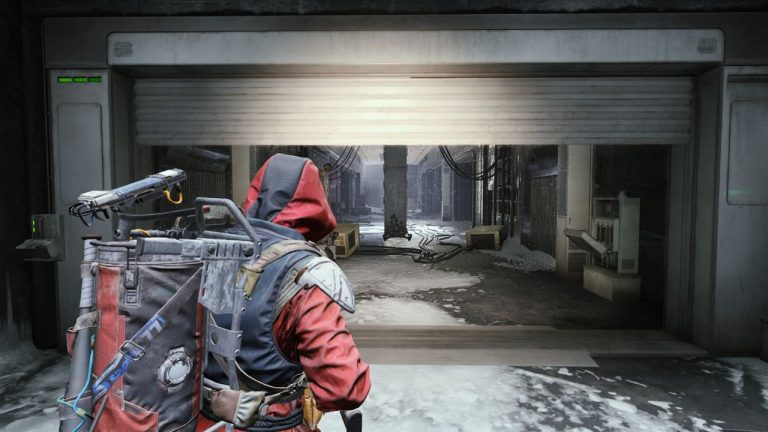
Moving over to gaming, Arc Raiders feels fluid and fast, and perhaps even better than it does with controller’s godlike aim assist. Admittedly, the very light and small frame does offer less comfort in my hands during the most hectic firefights than the likes of the chunky 8BitDo Retro R8 I’m used to, though.
FutureFutureFutureFutureFutureFuture
In horror shooter Crisol: Theater of Idols, I never found it to lag behind my movements or add any latency. Over long gaming sessions, the connection to the 2.4 GHz connector stayed consistent throughout.
In competitive shooter Counter-Strike 2, I found it snapped to heads fairly well, though it naturally lags behind more expensive, competitive mice. One thing using the G3 V2 cemented in my mind is that the diminishing returns for mouse performance sets in somewhere between $30 to $50.
Take the 8BitDo Retro R8 I use every day as an example. At $50 dollars, you can get up to 8,000 Hz polling while plugged in, and double the DPI. This means for almost 70% more, you are getting a DPI 210% more than the G3 V2 and a polling rate that is 800% better. But is that mouse 2.1x / 8x better overall? My answer is no. They both serve different purposes, and most gamers couldn’t justify the battery drain of a 8,000 Hz polling rate anyway.
Mchose G3 V2 Tested at 1,000 Hz — The closer the dots are together, the more consistent a mouse is reporting movement. More variation or stray dots makes for a less accurate sensor.FutureMchose G3 V2 Tested at 1,000 Hz — Each dot represents an update, which corresponds to the polling rate. Every 1 ms should mark a single update on a 1,000 Hz mouse.FutureMchose G3 V2 Tested at 1,000 Hz — The spikes represent an increase in velocity, with more erratic spikes showing tracking going haywire.FutureMchose G3 V2 Pro Tested at 1,000 Hz — The closer the dots are together, the more consistent a mouse is reporting movement. More variation or stray dots makes for a less accurate sensor.FutureMchose G3 V2 Pro Tested at 1,000 Hz — Each dot represents an update, which corresponds to the polling rate. Every 1 ms should mark a single update on a 1,000 Hz mouse.FutureMchose G3 V2 Pro Tested at 1,000 Hz — The spikes represent an increase in velocity, with more erratic spikes showing tracking going haywire.Future
When compared to the Logitech G503, this G3 V2 is a natural upgrade and well worth considering, but it’s not quite head and shoulders above its competition now. Instead, it sits alongside them as an equally good choice.
I’ve also tested out the G3 V2 Pro, which comes in at a couple of dollars more, in exchange for a PAW 3395 sensor and a DPI of 26,000. They are the same weight and feel identical. If I were picking up a mouse, I’d likely go for the Pro, partly because the difference is so minor in price. The Pro offers the same polling rate, though it does come with a few extra features in the Mchose software.
✅ You are looking for wireless on a budget: The G3 V2’s MSRP is so good that it would be a solid pick even if the mouse was just okay. Luckily, it’s better than that.
✅ You want something simple and no-fuss: With few buttons, no RGB, and software you can use in a browser, the G3 V2 is near plug-and-play.
❌ You have very large hands: With its small frame, I occasionally found myself misclicking purely because my fingers draped over the side.
❌ You want competitive-level play: 12,000 DPI and 1,000 Hz polling is suitable for the majority of gamers, but you will need to double, triple, or quadruple that budget to get more competitive specs.
One thing I do like about the G3 V2 is that you can download drivers online or use its software in-browser. It rarely takes more than a couple of seconds to connect, and from there, I can get any updates I need, plus adjust its six DPI profiles, and change button mapping.
I can also tinker with settings like polling rate, scroll wheel direction, hibernation settings, and key debounce, to adjust how fast I can click. It’s easy to use and far less cumbersome than the likes of the Logitech G Hub.
‘Un-cumbersome’ is a good description of the mouse as a whole. It’s budget-friendly, easy to use, uncomplicated, decently specced, and light enough to fling around a table.
If it had launched a few years ago, it would be a clear winner for the best mouse under $60, but now, it’s one of many solid mice. And that’s certainly not a bad thing.