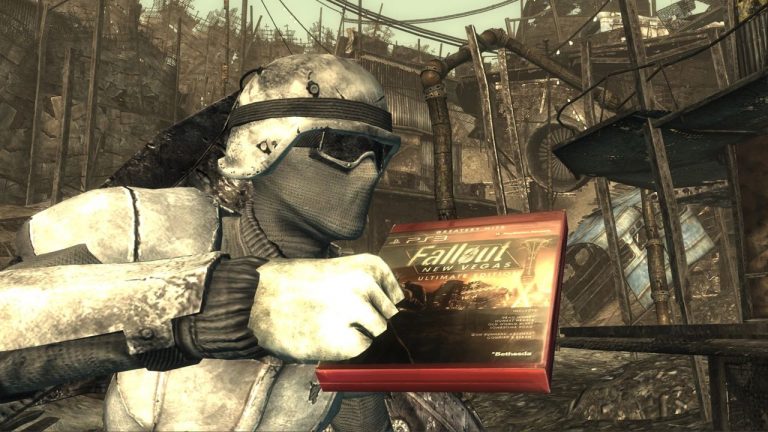
It’s not overstating things to say Tim Cain is a legend among PC RPG fans. The man’s got credits on a roster of games that would make other developers green with envy: Stonekeep, Fallout, Arcanum, ToEE, Pillars of Eternity, and more. And it all began, as he recounted in his most recent video, because he out-nerded the other guy.Cain played a lot of tabletop RPGs in his early days, which probably comes as no surprise: He developed a love for D&D in his early youth and carried it with him through college and as he pursued a PhD. “In the evening, I’d often play tabletop RPGs with grad school friends of mine because we didn’t have any money, so we couldn’t do anything,” Cain recounts in his latest video. “So we were kind of stuck in the student housing there. So we played a lot of games, including GURPS, which is where I learned it.”Knowing GURPS “became important later,” Cain says in the vid, because GURPS—the Generic Universal Roleplaying System developed by Steve Jackson Games—was originally intended as the underlying ruleset for Fallout, before licensing issues led to the creation of the SPECIAL system. Before all of that, though, a different system proved even more important to Cain’s career trajectory.After deciding to leave grad school, Cain sent his resume to Interplay, apparently because it was close to where he lived. He was eventually hired as a contractor, he says, because “they asked me if I knew THAC0,” and boy did he ever.THAC0 is kind of famous as the best-known of the most-derided old-timey D&D rules. It’s the number a character has to roll on a D20 to hit an enemy whose armor class is zero, which is adjusted during combat based on an enemy’s actual armor class. Here’s a quick breakdown if you’re curious, but the short version is that it was a cumbersome system, made even more confusing by the fact that a lower armor class was better, and you’d often have cases where characters would have negative ACs, leading to all kinds of math headaches.The system was dropped in D&D’s third edition, but not before one last, great hurrah in the original Baldur’s Gate games—and, as it turns out, helping Tim Cain get a job, opening the door to all that followed.”They were down to me and another programmer, and we were both about equal in coding skill. But not only could I tell them what THAC0 meant—to hit armor class zero—I then asked them if they wanted the values for THAC0 for each of the four major D&D classes, fighter, magic user, thief, cleric, at level one.”They said yes. And I told them the numbers, and I was right. And I got the job.”
The irony is that soon after getting hired at Interplay, Cain started holding tabletop gaming nights, but instead of D&D it was GURPS that dominated because it enables all kinds of different settings. Cain developed apps to support GURPs gameplay, like a character generator and a star system generator—and when Interplay decided it wanted to do a licensed RPG, GURPs was ultimately chosen.”I think part of the reason GURPs won is, it wasn’t just me pushing forward, it’s all those people I played GURPs with at night,” Cains says. “And we already had these apps which I pointed out had underlying code that would already jumpstart us into making a GURPs game.”And the rest, and they say, is history.
2026 games: All the upcoming games
Best PC games: Our all-time favorites
Free PC games: Freebie fest
Best FPS games: Finest gunplay
Best RPGs: Grand adventures
Best co-op games: Better together