There was a long period of time where the phrase ‘ray tracing’ was almost inescapable and slapped onto all the prettiest-looking games. However, as the memory crisis continues to devastate hardware prices, and game performance gets even more unpredictable, optimised games have become a real sign of a quality launch. And now, ray tracing is a bit of a rarity among the most popular new games.
Looking back at the last 12 months of the biggest games, I’ve spotted a mere handful that have ray tracing of any kind (optional or not), with only a few baking it into moment-to-moment interactions.
I’ve checked through the Steam player figures, incorporating both the top 100 for player currents right now, plus the top 100 for all-time player peak, and spotted a peculiar trend. Of 21 games, only 5 have proper ray tracing, and one of those five (Monster Hunter Wilds) only uses it for simple reflections.
You can see the full breakdown below.
Game
Ray tracing
Arc Raiders
Yes (optional)
Mewgenics
No
Nioh 3
No
No
Elden Ring Nightreign
No
No (though it is present on the PS5 Pro version)
Yes (optional)
Battlefield 6
No
No
NBA 2K26
Yes (optional)
Monster Hunter Wilds
Yes (optional)
No (uses software voxel-based global illumination, though)
No
Hollow Knight: Silksong
No
Schedule 1
No
Borderlands 4
Not in-game (uses software Lumen, though)
No
No
No
No
Yes
It is worth noting that Borderlands 4 uses software-based Lumen (thanks to Unreal Engine 5) and Kingdom Come: Deliverance 2 uses voxel-based global illumination, which is based on voxel ray tracing. Global illumination, which you can spot in the likes of Nioh 3, can use ray tracing or even path tracing in the process, but it is pretty intensive, which is why so many games don’t do it this way.
Many of the top games are more indie-focused and, therefore, less likely to employ such high-performance techniques. In any case, my table shows just how much people like more budget-friendly and easy-to-run indie games, too.
(Image credit: Koei Tecmo)
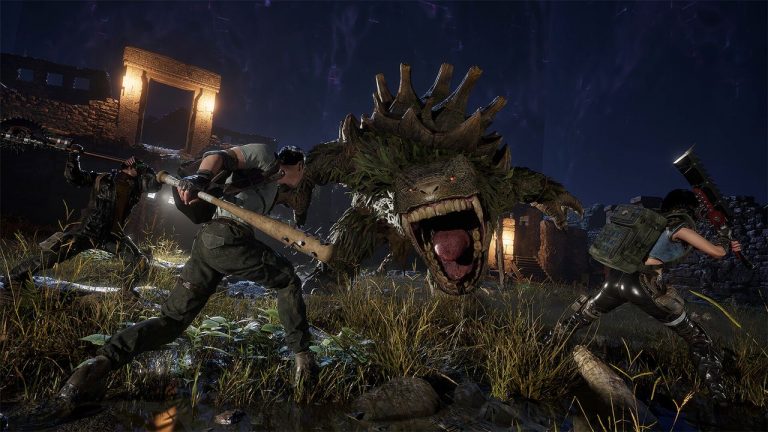
Thanks to the wider adoption of Unreal Engine 5, we might see more games with software-based ray tracing thanks to its implementation of Lumen. But Arc Raiders uses the engine and has hardware-level ray tracing.
Software ray tracing in Lumen is designed to be quick and simple; enabling hardware ray tracing in Lumen produces better quality results but with an expected drop in performance unless the hardware can hack it. Naturally, which techniques developers choose to implement will be based on what they think works for it, but software ray-traced Lumen is a default in UE5, so teams may not want to change that.
Interestingly, though, we saw a direct move away from hardware-based ray tracing for Elden Ring: Nightreign in 2025. Where Elden Ring got ray tracing post-launch, Elden Ring: Nightreign is still missing that option.
When the RTX 20 series was announced, its headline feature was the implementation of hardware-based ray tracing through RT cores, with the addition of DLSS practically being a footnote. Naturally, DLSS is a strong way of getting your rig to run hardware ray-traced games, even if it’s a little underpowered.
Battlefield was pretty much a poster child for the technology, showing off its pretty reflections in Nvidia trailers. At the time, Lars Gustavsson, the senior producer, said “as technology has advanced, it has allowed us to continue to push for a more richer and more immersive experience”. He argued, “Nvidia RTX technology allows us to draw much more realistic reflections. I think that players will be truly amazed to see real-time ray tracing in a big game.”
Just last year, however, Battlefield 6 went entirely without it and aimed purely for playability. Technical director Christian Buhl said, “There are pros and cons to a lot of those different technologies … Our goal is for everything to be performant without a lot of extra stuff.” He also said, “We want Battlefield 6 to run great without [DLSS], and we want to give you the option to use it if you want.”
(Image credit: EA / Battlefield Studios)
Battlefield 6 is a relatively easy-to-run game, and a pretty one at that. It foregoes ray tracing and shows that there’s more than one way to skin the digital cat, or blow up the enemy’s tank. I think many (myself included) would have assumed ray tracing as standard for Battlefield 6, but it looked great without it, and picked up a hefty player count in the process.
It’s not just about the most popular Steam games either. Best story winner Clair Obscur: Expedition 33 doesn’t have hardware-based ray tracing, nor did best action game winner Hollow Knight: Silksong—though that might’ve been a bit ridiculous. In fact, of our picks for the best games of the year, just one (Arc Raiders) uses hardware ray tracing.
This isn’t to say that hardware-based ray tracing is dying. In 2025, we still saw it in:
Assassin’s Creed: ShadowsAvowedDying Light: the Best (post-launch)Doom: The Dark Ages (path tracing post-launch)Outer Worlds 2Cronos: The New DawnFBC: Firebreak
It instead suggests that ray tracing has seemingly shifted from a thing you slap on the box to show off puddles, to a technique teams can use if it fits their style and direction. And even when it’s not implemented on a hardware level, it can still find its way into pipeline somewhere.
(Image credit: GameScience)
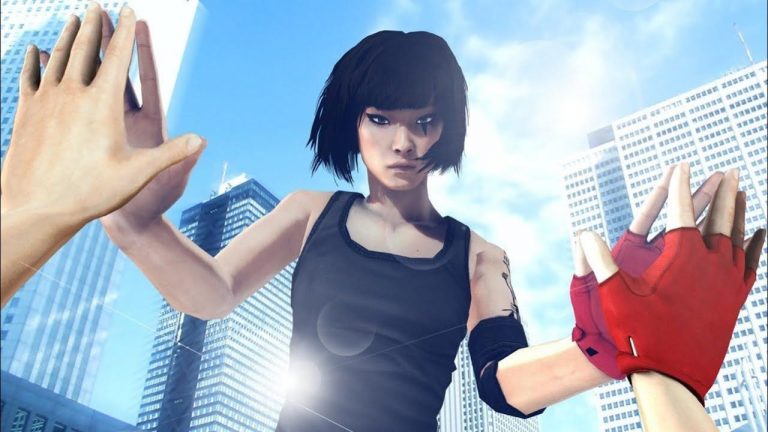
We have seen some titles launch with ray tracing as the only option in recent years, like Stalker 2: Heart of Chornobyl, Indiana Jones and the Great Circle, and Black Myth: Wukong. This again feels like part of that shift, like ray tracing as a technique is a fundamental part of how the world is constructed.
The fact that so few of the most popular games have ray tracing is particularly strange, given that the range of cards capable of using the technique is only getting greater over time. We have three generations of Nvidia cards now, and even though they’re getting tougher to buy at MSRP, there are tonnes out there in the wild, and in rigs.
And ray tracing isn’t a gimmick. It often looks absolutely gorgeous, and it’s simply a better way to go about a heap of effects in games. When I’m given the option and know I can handle it, I just can’t help but turn it on. It helps that ray tracing is often easier to implement than bespoke reflection, which can certainly help with development time and establishing a firm artistic throughline.
However, this shift from ray tracing as standard in big-budget games could allow for better optimisation, especially if it’s an optional toggle and not an afterthought. With the global memory crisis showing no signs of ending any time soon, hardware is getting harder to buy and more expensive, so any efforts to move away from standard practices in favour of what the team thinks the game needs is a win in my book, even if I sure would have loved to see Mewgenics with photorealistic puddles.