After playing a DNA-altering amount of Monster Train 2 over the holiday break, I felt like I was entering the twilight of my time with the game. 370 hours, 127 wins against the Titans—I was still enjoying filling out my logbook with wins, but I’d gotten everything and more that I’d needed out of the game, and my preferences for units and spells had calcified to the point of predictability.
After spending a week with a pre-release build of Destiny of the Railforged, my enthusiasm is renewed. Though the DLC doesn’t touch every aspect of Monster Train 2 (there are no new Alcove events, for example), it’s a substantial package that makes an already large experience feel supersized.
Also there’s a card that lets you grab units—friendly or enemy—with a giant claw and move them to another floor, which feels cool as hell. Yoink.
The anvil and the worm
The two new clans, Railforged (DLC) and Wurmkin (free, available outside the DLC), are meaningfully distinct from the existing roster. Railforged have multiple new mechanics and Wurmkin’s room-boosting Charged Echo mechanic makes a welcome return.
Wurmkin, like Melting Remnant, don’t have deep cross-interaction with other clans because their spells are so focused on earning and spending Echoes, which have various floor-specific effects. Railforged have much more universality, and I’ve liked them more than Wurmkin because their design feels so thematically linked with their identity as anvil-smacking Hephaestus lookalikes.
Railforged’s smelting mechanic is my favorite thing the clan can do—it opens up fun, newfound strategies and adds value to higher-cost cards. Smelting consumes a card in your hand, melting it down into energy and forge. Some Railforged units produce unplayable scrap metal cards that persist in your hand but “refine” each turn to increase the energy and forge they output. In practice it’s sort of like being able to turn any card in your hand into Kindle. But you can also smelt blight cards—the feeling of flipping a harmful curse into raw resources is great. On some runs I was deliberately drafting Calcified Embers just to have them available to smelt.
I have struggled to survive the early game in standard Covenant 10 runs with Railforged, who lack high base attack units and do not have damage spells in either starter deck to ping off weak enemies. They’re tuned in a way that challenges you to smartly employ forge—Railforged’s in-round resource that boosts the attack and armor of units or equipment when you play them. The mechanic really makes you consider when you play equipment and units in a way that hasn’t previously felt like a choice. It also enriches the decisions you make around drafting equipment—I found myself visiting the Merchant of Arms more frequently.
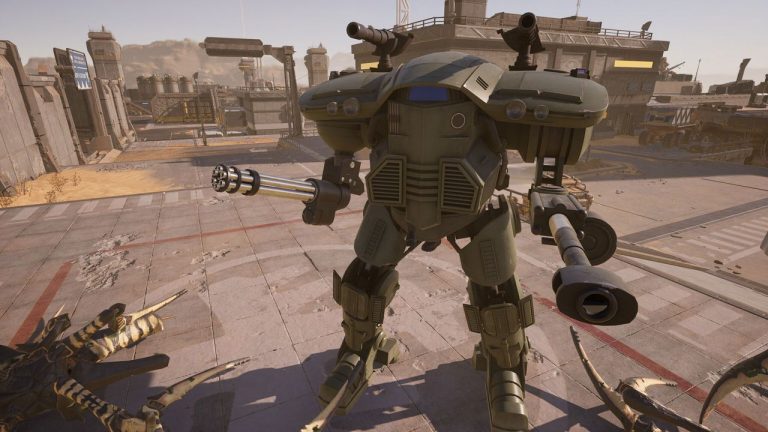
The Railforged champion Heph can produce basic equipment on a cooldown, imbuing it with forge to make it more powerful. (Image credit: Shiny Shoe)
Naturally, the equipment-laden Lazarus League are a particularly strong partner for Railforge. Because forge grants a proportional amount of armor to any equipment or unit you play, the mechanic lets you spot-apply defense in a way that feels different enough to Monster Train 2’s existing tricks.
Both of the new clans really value floor space, evidenced by Railforged’s Renovate card, which expands the floor by X energy (there’s also a card that deals damage proportional to floor capacity). Railforged don’t drop conspicuously tough units like Greed Dragon on the board, but they have mindblowing new things they can do like this, or a card with the ability to merge equipment mid-round, Fused Weaponry. Some further evidence that Railforged aren’t straightforward bruisers: my favorite unit of theirs is a zero-attack, 50-health factory with an active ability that produces a variety of different burst-imbued mechanical spiders, sort of like Lazarus League’s mix mechanic.
Steel Pulley Claw is Railforged’s ridiculously high-utility room card, the first room with an active ability, which lets you grab and relocate any friendly unit or enemy to that room’s floor. I can’t believe it has a cooldown of 1. I was using it every round to peel off pesky backline enemies for easy killing, or to just slowly consolidate my units onto a single floor.
They’re a great clan that adds functionality to the existing roster. I like the high amount of interaction between floors and units that Railforged has, which produces a real feeling of teamwork compared to other clans where I’m just running my strategy through a single brute.
Slopping on a bunch of decay with Spore Launchers: still good. (Image credit: Shiny Shoe)
Soul train
The other half of the DLC is a new mode called Soul Savior that plays like Monster Train 2 on steroids: enhanced units, absurd upgrades, heightened difficulty. In this new style of run you accumulate spectacular upgrades called souls, bringing up to three souls into the start of each run and then drafting a few more of them as you defeat Soul Savior’s five bosses.
Though you can’t put them on champions, souls occasionally feel like cheat codes—a soul named Ghastbud, once fully leveled up through Soul Savior’s meta-progression system, applies Titanite, Damage Shield 4, Endless, and -2 energy cost to a unit. Mimic straight-up gives you a second champion from your allied clan. I like the way that many of the 33 souls feel like new verbs, not just simply +1’d versions of existing upgrades. Metamind adds an upgrade slot to a spell each time it’s played, opening the door to absurd gigaspells. Souls can also be swapped mid-run, which meaningfully alters which units you draft and where you deploy them.
These new forms of power are necessary because, and I cannot stress this enough, the enemies in Soul Savior are absolutely juiced. One of the first basic enemies you encounter gains decaying multistrike (a new status called burst) when hit, pressuring you to kill it in as few hits as possible before it waltzes up to your pyre with something like 20×4 attack. There are bosses with triple-digit attack and trample. Bosses that reduce the capacity of your floor. Frontline annoyances that apply dazed to your unit if you kill them.
Again, I appreciate the work Shiny Shoe has done to add so much new stuff to an already big game, not just rearrange what’s already there. An enemy called Mother’s Zephyrite behaves in a particularly unique and devious way, gaining burst when it moves, descending on slay and gaining armor 10. In other words, if it kills one of your units, it sticks around longer and gets more powerful. Are there no rules of war on this divine train battlefield?
The new enemies and bosses have original tricks that knock you out of your comfort zone. (Image credit: Shiny Shoe)
My first seven or eight runs facing this menagerie of new and remixed enemies was a little disorienting. The amount of overlapping triggers and status effects in play at once (there are at least five new ones) is greater than the base game, which sometimes made it hard for me to unravel why a unit was surviving or dying.
But after 25 or 30 runs, that shakeup is what I’ve come to appreciate about Soul Savior: it’s upended some of my well-worn Monster Train 2 habits. Some strategies still work (I used a trio of Spore Launchers with Dualism to overload the final boss, the Lifemother, with decay), but familiar ones are disrupted. Enemies with the new Sniper status, for example, single out your rearmost unit, dealing damage only to them, cancelling whatever glass cannon you might’ve positioned there.
The power increase on both sides of the train has translated to spiky runs where I win big or lose big. On some Soul Savior playthroughs I’ve built up such hilariously lethal units (seen in my screenshots within the article) that the cards I play stop mattering, but on higher difficulties I sometimes lose so quickly that I’m unsure whether a run was winnable with the souls and clans I picked.
So for the most part, Soul Savior is refreshingly difficult—its second difficulty level (of three) is harder than a Covenant 10 Titan run. The other layer of fresh pain the mode throws at you are curses, negative global effects like persistent unit damage or reduced floor capacity that stack up as a counterbalance to souls. I think newer players to Monster Train 2 could be overwhelmed by the volume of stuff to keep in your head as a run progresses (both the Lifemother and her four miniboss children have three variations), but overall I’m pleased with Shiny Shoe’s willingness to crank up the train pain in service of renewing the experience.
This unkillable giant Husk Hermit made possible by two space-expanding boss relics, which are purchasable at upgraded Trinket Shops. (Image credit: Shiny Shoe)
Two minor criticisms: the way the overworld map nodes are arranged in Soul Savior rubbed me the wrong way. The mode always gave me many more unit drafts than I needed, and somehow it felt harder than it should to pick up base upgrades for units or spells at the right time.
I’d also say that souls unlock surprisingly quickly, a little faster than I’d like them to. After two wins (and a few unsuccessful runs) against the Lifemother, I’d unlocked 19 of the 33 souls, and had upgraded versions of 12 of them. Each soul has three tiers of upgrading. So there are comfortably tens of hours on offer to fully level up your souls in Soul Savior, but not a sprawling career-sized experience equal to filling out your logbook for all (formerly) 180 clan combinations.
Luckily the Railforged and Wurmkin have expanded that facet of the base game. Out February 2, the package is a no-brainer at the respectful $10 price, and generously widens this moreish deckbuilder—the best in gaming. It’ll hold that title for me until another deckbuilder lets me use mass-produced steampunk spiders, each wielding giant hammers that generate gold coins and armor every time they swing, to obliterate the corrupted mother of creation.