Desperate times call for desperate DIY, I think the saying goes. And what with all the signs suggesting the memory crisis will get worse before it gets better, these are certainly desperate times. So, here’s one solution: Make your own memory sticks.
That’s exactly what one Russian modder claims to have done (via Videocardz). Now, breaking ground on a new fab to actually manufacture memory chips might be a bit beyond the wit of even the most enthusiastic DIY’er. But where there’s a will…
The modder, who goes by the handle VIK-on, used a pair of 16 GB DDR5 laptop SODIMMs as a starting point. The next step was to source a compatible PCB with the aim of combining all 32 GB onto a single homebrew DIMM.
Reportedly, the total cost of the build was $218, about a third of the going rate in Russia for a 32 GB DDR5 stick. Nice.
VIK-on also looked into using even cheaper 8 GB sticks to source memory chips, but it seems the chip packaging raises problems when it comes to creating 32 GB sticks.
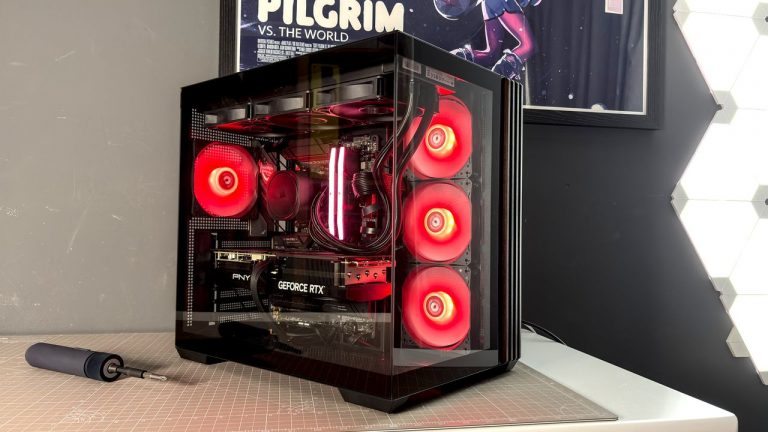
Are laptop teardowns and RAM chip harvesting the future of desktop PC gaming…? (Image credit: Future)
Of course, as you’d expect, this isn’t an easy process. Even if you think you’re up to all that soldering, you’ll also need to be comfortable handling memory DIMM firmware. This mod is said to have pinched some ADATA firmware with a 6400 CL32 XMP profile.
The overview of the DIMM creation process doesn’t detail what chip was used for the firmware, so it’s not clear how difficult that might be to source. Whatever, the newly home-brewed DDR5 stick is said to be up and running, cranking out stable frame rates.
This kind of mod is no doubt beyond most DIYers. However, it does hint at the distorted state of the market right now. If you can DIY yourself to a 32 GB stick for a third of the usual price, there’s surely some fat in the market, right?
Likewise, this suggests that if the memory crisis rolls on long enough, it might become economically viable for someone to take this kind of mod on commercially, buying up redundant memory sticks and repurposing the chips to meet the highest demand segments.
I doubt that would send RAM prices tumbling. But it might be better than nothing if this ludicrous crisis carries on for years.