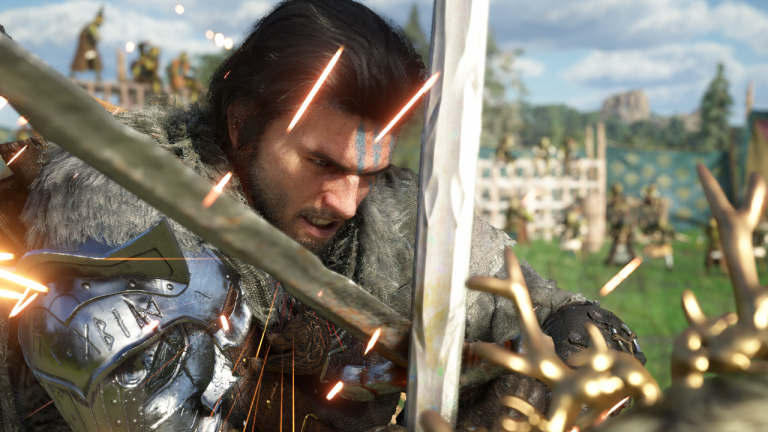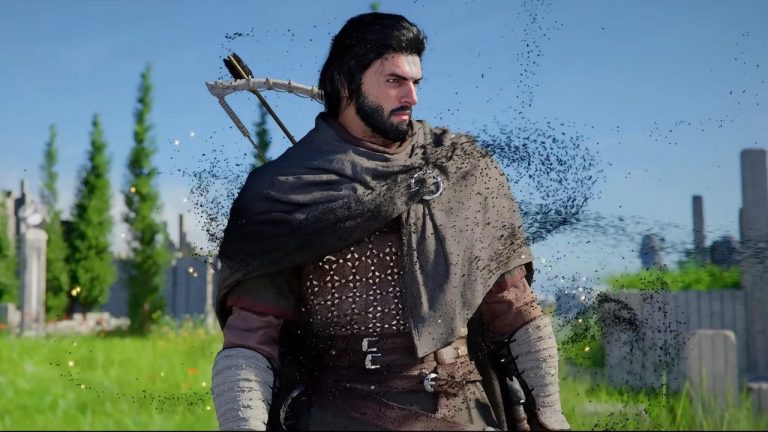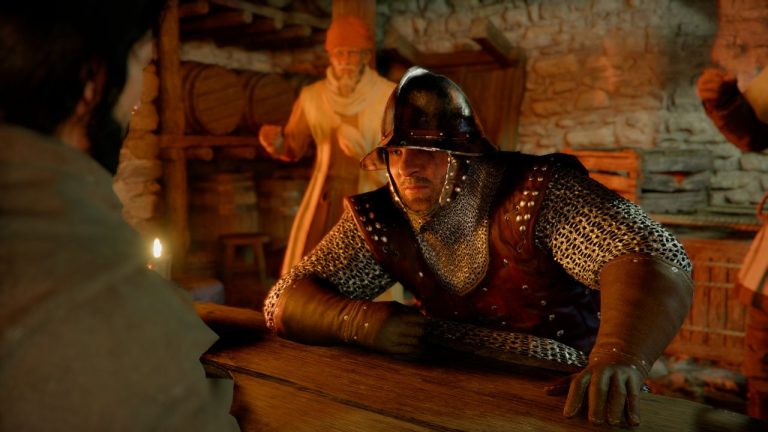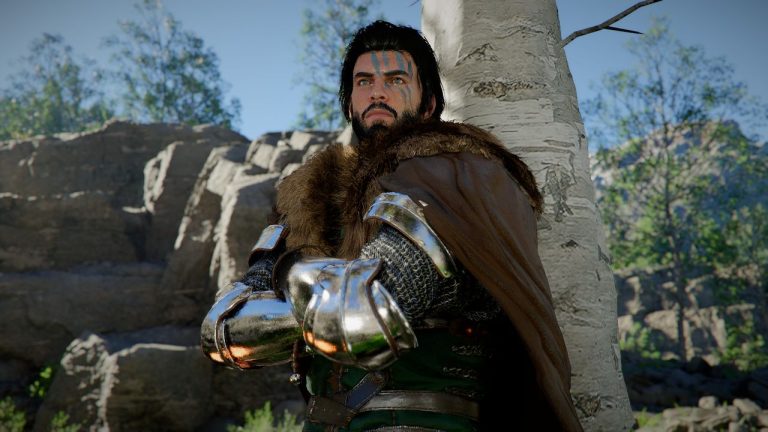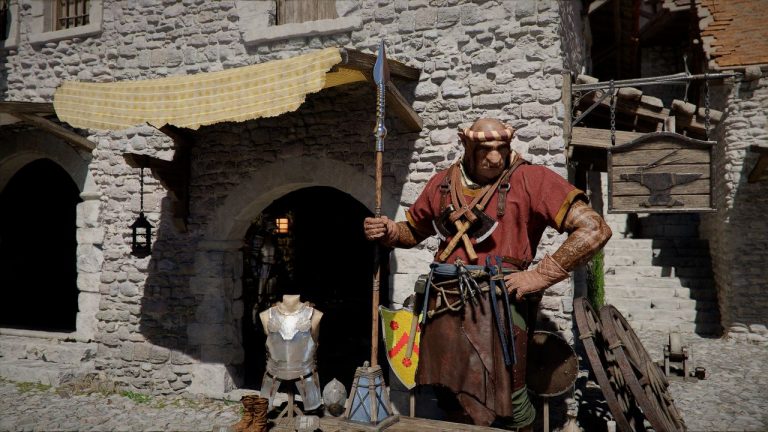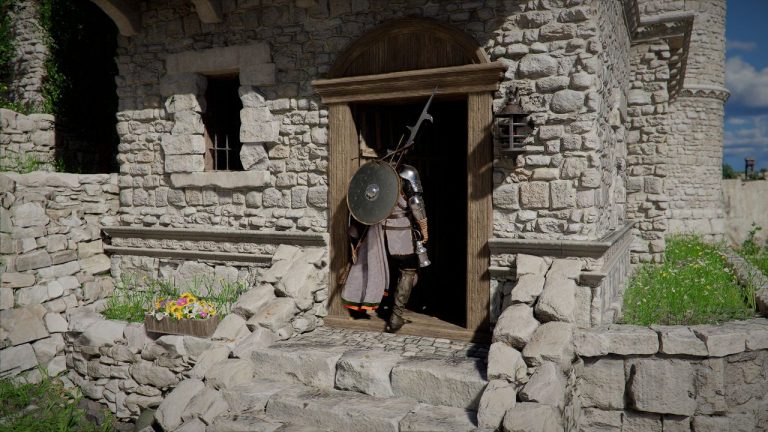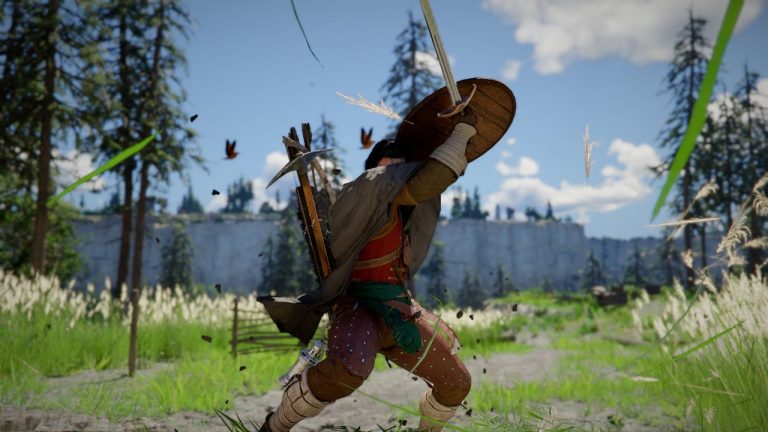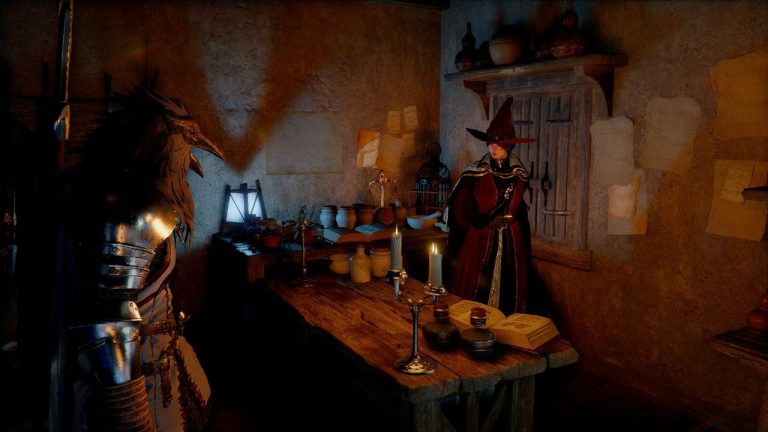
Horses, a horror game developed by indie studio Santa Ragione that was banned on Steam two years before its release, nonetheless hit stores earlier this month. Just not two of the big ones: Epic also pulled Horses from sale just one day before launch, but Horses found a home on GOG. Humble, too, though the storefront did initially have a bit of a panic.
Reasons were mostly based on the content of the game—it being an arthouse-style horror about a man on a farm populated by naked people wearing horse masks, dealing with themes of sexuality, violence, slavery, and so on. In particular, a scene where a child was depicted riding on the back of one of the farm’s captives, the horse-headed captive being naked. This was later changed before the release of the full game.
In a new press release, Santa Ragione has stated that the game sold 18,000 copies thanks to “extraordinary coverage of the bans, GOG’s public support, and a very positive reaction from players.” This was enough for the studio to tidy up its loans and royalties, but not enough for the “production on a new game.”
It adds: “The money primarily covers obligations created by a prolonged end of development. If sales remain steady, we may be able to fund a new prototype in the future, but the team has had to, and will continue to, take on other jobs and projects in the meantime. Reuniting everyone will not be easy, even if it is something we would love.”
Santa Ragione still isn’t much pleased with Steam and Epic’s behaviour, though: “We also want to be clear about why this success does not erase the impact of what happened. The Steam ban, and the development delays that followed, forced us into a prolonged scramble for funding, with debt, opportunity cost, and team members taking on other work. That fragmentation is a lasting consequence, even if the launch outcome has been meaningful and positive in important ways.”
That’s to say nothing of the material impact of not being on Steam, which has a strong grip on the PC gaming industry at large: “a strong two-week result on smaller storefronts does not tell us what a full Steam release could have looked like.”
All of this, the studio maintains, “should not distract from the broader issue at stake: the need for clearer rules, transparent processes, and meaningful accountability from near monopolistic distribution platforms and the systems they enforce.
“For every case like Horses that becomes visible, there are many more games that are quietly banned, delisted, or trapped in indefinite review for unclear reasons, with developers too worried about retaliation or future approval to speak publicly.”
Even GOG, which proudly stated that Horses would be sold on its store, enacted a similar ban of Red Candle’s Devotion back in 2020—it seems that, bluntly speaking, videogames are a rough place to do anything subversive, challenging, or sexual. Combine these platforms’ skittishness over the content they put up on their stores, and credit card companies muscling in? I can’t imagine being an indie, which is already an inherently risky proposition, and deciding to tackle these themes. Even if, as a medium, videogames can and should absolutely do so.
Best MMOs: Most massive
Best strategy games: Number crunching
Best open world games: Unlimited exploration
Best survival games: Live craft love
Best horror games: Fight or flight