G.Skill has issued a statement directly addressing the recent spike in its DRAM memory pricing. The company writes: “DRAM prices are experiencing significant industry-wide volatility, due to severe global supply constraints and shortages.” I’ll give you three guesses as to who G.Skill says is behind the memory shortage.
If you guessed “unprecedented high demand from the AI industry”, then give yourself a shiny gold star. The memory company goes on to say, “As a result, G.Skill procurement and sourcing costs have substantially increased. G.Skill’s pricing reflect industry-wide component cost increases from IC suppliers and is subject to change without notice based on market conditions.”
G.Skill are just the latest memory manufacturer to speak on the subject of surging DRAM prices—add this statement to the pile. G.Skill joins modular laptop makers Framework, which has raised the price of its RAM options by 50% (though, somehow, this is still below the market rate). The market is so volatile right now that Samsung and SK Hynix are opting to “minimize the risk of oversupply” to avoid getting burned by another sea change—though that could drag out supply issues into 2028.
As the memory apocalypse rages on, you’d be forgiven for having a foreboding sense of deja vu. That’s because it’s not just system memory AI datacentres are so hungry for, but storage too. For instance, Kingston recently shared that it has seen a 246% increase in NAND wafer prices, with the biggest increase ‘within the last 60 days.’
As a result, 2026 is shaping up to be a very expensive year for any consumer looking to upgrade their gaming rig or pick up a brand new system. Lenovo and HP have already warned customers to expect PC price hikes in January, though Dell got in on that action early.
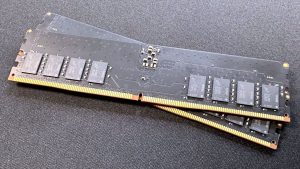
Like gold dust. (Image credit: Future)
Both Acer and Asus have confirmed they will be passing some of the burden of spiking memory costs on to consumers as well. In fact, both Acer CEO Jason Chen and Asus co-CEO Samson Hu have expressed that this is increasingly becoming an industry-wide consensus. For just the icing on a fairly rubbish-looking cake, Goldman Sachs research also suggests both DRAM and SSD pricing will continue to spike next year as demand simply outstrips the supply.
So, what can you do? Kingston’s Datacentre SSD Business Manager Cameron Crandall recently said anyone looking to upgrade should “Do it now and [don’t] wait, because prices are going to continue to go up.”
However, I’d say panic-buying is still not the way. If you can, make the most of what you already have. Otherwise, keep your eyes peeled for deals on our best SSD deals for gaming page and our graphics card price watch. Or, you can pull up a chair and watch us despair at the runaway pricing of DDR5 memory.



![‘I don’t love AI slop myself’ says Nvidia chief Jensen Huang: ‘I’m empathetic towards what [gamers] are thinking. That’s just not what DLSS 5 is trying to do’](https://prefersystems.com/wp-content/uploads/2026/03/i8EWmwnrmNqsd28NzYjyfe-1280-80-8AuXqU-768x432.jpeg)