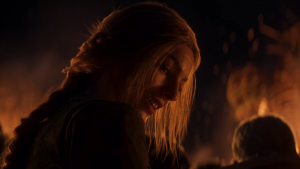
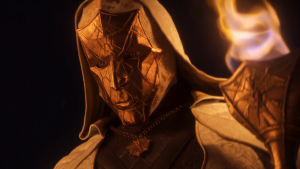
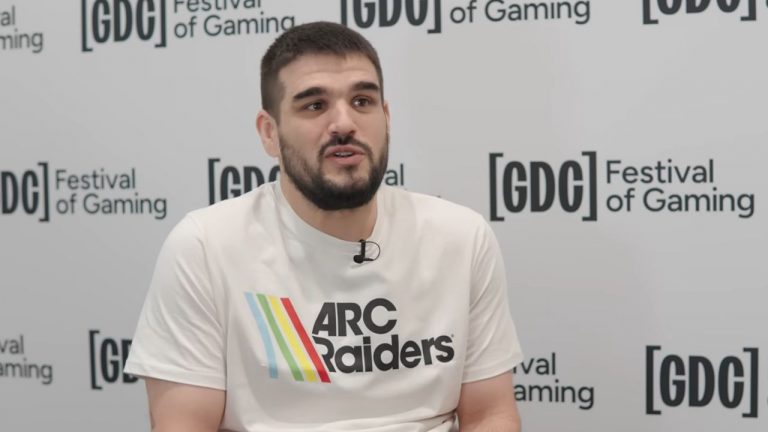
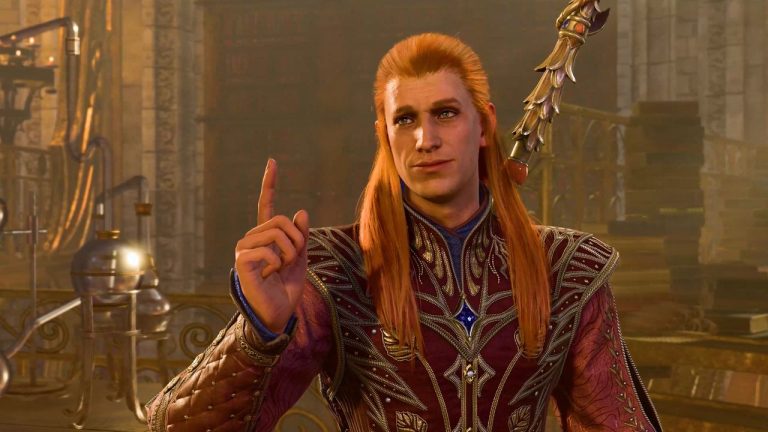
In the wake of its gruesome Game Awards reveal, everyone was arguing about whether Divinity would be turn-based like Baldur’s Gate 3, or an action RPG. Wonder no more: in a post-TGA interview with PC Gamer, Larian boss Swen Vincke confirmed that Divinity will be a turn-based RPG, and elaborated a bit on what we can expect from its combat and systems.
“It’s not a clone of D:OS 2 in that sense, it’s a new ruleset, a ruleset built on everything that we learned from all the previous games that we’ve done,” said Vincke. “I think you’re gonna enjoy it. It’s very easy to learn, very hard to master, but it allows you to do fantastic things, which is the most important bit.
“It’s going to give you a really good time figuring things out, and how you can chain things to one another and come up with all kinds of shenanigans.”
When asked whether Divinity would be turn-based and have a similar party size to Baldur’s Gate 3, Vincke responded in the affirmative. Baldur’s Gate 3, as well as both Original Sin games, allow four characters in your active party at any time. So while Vincke didn’t provide the exact number, four seems like a sure bet. An open question remains whether we’ll see the return of BG3’s party camp, or if you’ll be limited to only the four characters in your active party for the whole game, which was the case in Divinity: Original Sin 2.
From there, we’ve got room to speculate. I’d expect at least as much of a change in rules and mechanics as the one from Original Sin to OS 2, but there are fundamental design choices they share in common, some of which strike me as core to the series identity.
Here are some of the key mechanical commonalities between the Original Sin games, ordered by most to least likely to return in Divinity, according to my gut:
A focus on environmental and elemental combos—also shared with Baldur’s Gate 3—such as pools of water or active rain improving your lightning damage.Classless character building, with starter classes being more of a jumping off point.Combat abilities and spells bought from merchants or found in the world, rather than unlocked per level.Action point-based turns, like the OG Fallout games, rather than the discrete actions and bonus actions of Baldur’s Gate 3.Randomized, leveled gear: The Original Sin games don’t support taking the same weapon from the beginning to the end of the game, like you might with BG3’s Phalar Aluve or Titanstring Bow. Late game weapons do exponentially more damage to account for the way enemy health and resistances scale. This one strikes me as the most up in the air.
We got answers to some of our most burning Divinity questions during the conversation, and you can see them all in our rundown of the six biggest things we learned about Divinity. We also have a guide to how you should get into the series if the only Larian game you’ve played is Baldur’s Gate 3.
Baldur’s Gate 3 romance: Who to pursue
Baldur’s Gate 3 multiplayer: How co-op works
Baldur’s Gate 3 endings: For better or worse
Baldur’s Gate 3 multiclass builds: Coolest combos
Best RPGs: The greatest you can play now