I don’t mean to harp on the scare chord, but more and more manufacturers are feeling the heat from the memory pricing apocalypse. The latest cohort includes HP, Lenovo, and Dell, all of which have reportedly told customers to expect new year price hikes.
Industry sources claim Dell may raise its prices as soon as mid-December, and by as much as 20%. Lenovo on the other hand has apparently told customers that all of its current quotes will expire as of January 1, 2026 (via TrendForce). Why? You guessed it: memory shortages and surging prices, driven by the demands of big tech’s AI pipedreams.
HP estimates that memory accounts for around 15 to 18% of the cost of even a fairly standard PC, with CEO Enrique Lores already warning that the second half of 2026 will be a particular challenge pricewise (via Asia Business Daily). Seeing as PC gaming is expensive as it is, knowing further price hikes are imminent is still a bitter pill to swallow.
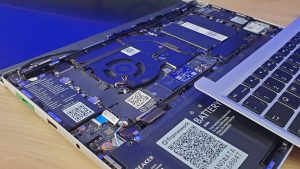
As such, some have not been shy to voice their displeasure, with Framework for one directly criticising Dell’s price hikes. The modular laptop maker had previously delisted its own standalone memory to ‘head off scalpers’, and more recently posted to X that it would “need to increase our memory pricing soon, but we won’t use this as an excuse to gouge customers like Dell apparently has.”
Currently, Framework is offering 16 GB of DDR5 RAM for only $80—though for how long, remains to be seen. Furthermore, in defence of Dell, we’ve looked at the machine that apparently had a disproportionate and extortionate price increase for a RAM upgrade, and in reality the memory upgrade alone is just $150. How the OP managed to engineer such a hefty price hike is likely more down to some other component upgrade that would have occured alongside the increased memory, like switching to another CPU core.
(Image credit: SEAN GLADWELL via Getty Images)
Still, with Chosun Biz reporting that the price of some DRAM components has spiked by as much as 170% compared to this time last year, it’s not hard to see why PC manufacturers may think price increases are a sensible move. In other words, this is a thoroughly insensible situation—and memory pricing may stay silly all the way through 2028 judging by some of the most dismal projections.
But it’s not just memory and the PCs you may find it in, with the situation already having a knock-on effect on many different aspects of PC gaming hardware. If you’re desperate to upgrade, sooner may be better. On the other hand, if you’re thinking about putting off, say, that motherboard upgrade, you’re hardly the only one with mobo sales apparently down by as much as 50% year-on-year. As prices continue to rise, saving your pennies still seems the safest bet.